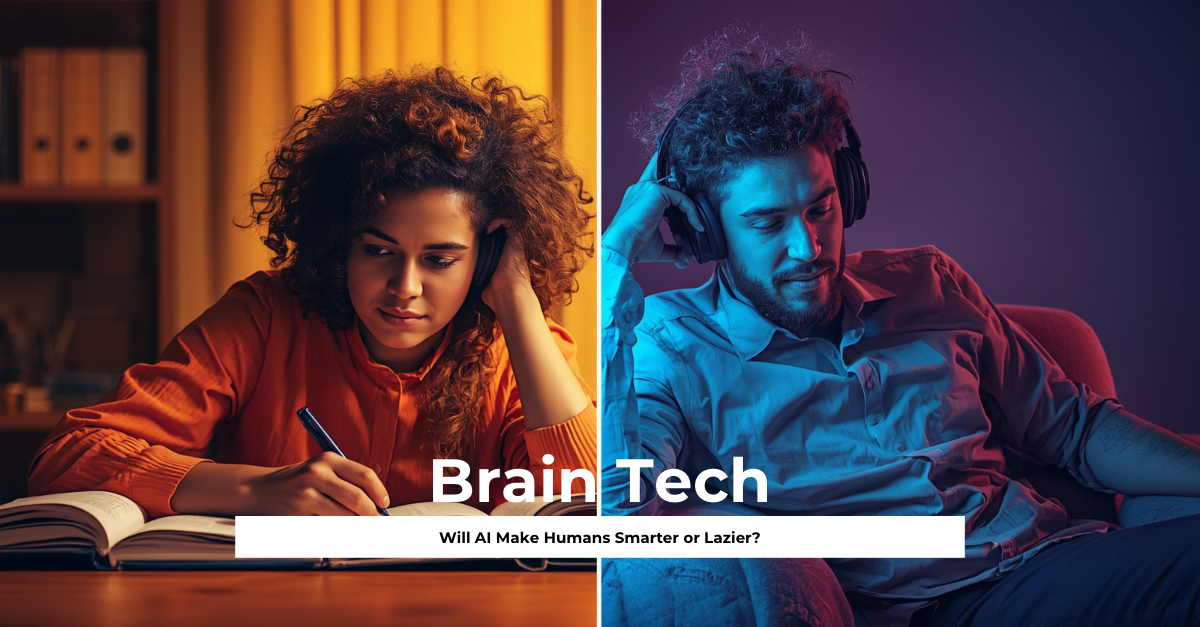
Will AI Make Humans Smarter or Lazier? When Everything Gets Easier, Does Our Brain Develop or Regress?
Hey friend, picture this: you wake up, ask your AI assistant what the weather is, what to wear, what to eat for breakfast, and even what to reply to that tricky email. Everything feels effortless. But here’s the hook that stopped you mid-scroll: When everything becomes easier, will our brains develop or regress?
That single question is on everyone’s mind in 2026 because AI isn’t some far-future gadget anymore — it’s already sitting in your pocket, your laptop, and even your smart fridge. We love the convenience, yet deep down many of us worry: Are we getting sharper, or are we quietly handing over our thinking muscles to machines?
In this article, we’re going to unpack the whole story in plain, human language. You’ll discover the real ways AI can supercharge your intelligence, the sneaky traps that can make you mentally lazy, and most importantly — practical steps you can take right now to make sure AI becomes your ally instead of your crutch. By the end, you’ll have a clear picture of both sides and a simple action plan that even complete beginners can follow. Let’s dive in together.
Why This Question Hits Different in 2026
We’re living through the fastest technology shift in human history. Just a few years ago, AI was mostly about generating funny images or answering basic questions. Today in 2026, AI agents handle complex projects, write code, analyze data, and even coach us through personal decisions. The speed of change makes the smarter-versus-lazier debate feel urgent.
The Rapid Evolution of AI Tools We Use Every Day
Think about how natural it feels now to have an AI summarize a 50-page report in seconds or create a complete presentation while you sip coffee. These tools aren’t just faster — they’re smarter. They learn your style, remember your preferences, and anticipate your needs. But that very helpfulness is exactly what raises the big question.
From Simple Helpers to Near-Partners in Thinking
AI has moved from tool to almost-colleague. It doesn’t just fetch information; it connects ideas across fields you might never have linked yourself. For curious minds, this feels like having a genius friend who never sleeps. Yet for others, it starts to feel like the friend who does all your homework — convenient until exam day arrives and you realize you never learned the material.
The Bright Side – How AI Can Actually Make Us Smarter
Let’s start with the optimistic truth: AI doesn’t have to make us dumber. Used correctly, it can become the ultimate brain booster.
AI as Your Personal Brain Trainer
Imagine having a tutor who adjusts difficulty in real time, explains concepts in the way you learn best, and never gets impatient. That’s what modern AI learning platforms do in 2026. They don’t replace thinking — they remove the boring repetition so you can focus on higher-level understanding and creative leaps.
Personalized Learning That Adapts to You
Whether you’re learning a new language, coding, investing, or public speaking, AI can create custom paths. It spots your weak spots faster than any human teacher and gives you targeted practice. People who actively engage with these systems often report feeling sharper because they spend more time on challenging, meaningful work instead of rote memorization.
Boosting Creativity and Problem-Solving Skills
Here’s something beautiful: AI handles the grunt work, freeing your mind for true creativity. Writers use AI to brainstorm plot twists then refine them with their own voice. Designers generate dozens of concepts in minutes and pick the most promising ones to develop further. The result? More ideas, faster iteration, and bigger breakthroughs.
Real-World Examples of People Getting Sharper
Take Sarah, a small-business owner in Bangkok. She used to spend hours researching marketing strategies. Now she asks her AI to pull the latest trends, then spends her energy deciding which ideas fit her unique brand. Her business grew 40% last year — not because the AI ran it, but because she had more mental space to think strategically. Stories like hers are everywhere in 2026.
The Hidden Danger – When AI Turns Us into Couch-Potato Thinkers
Of course, the story has another side. The same tools that can elevate us can also quietly erode our abilities if we’re not careful.
The Convenience Trap and Mental Muscle Atrophy
Think of your brain like a muscle. When you lift weights, it grows stronger. When you let the machine do all the lifting, the muscle softens. AI is the ultimate mental weight machine. Let it plan your entire day, solve every problem, and summarize every article, and you might stop practicing the very skills that make you human — critical thinking, memory, patience, and deep focus.
The “Google Effect” on Steroids in 2026
Remember when people joked that we stopped remembering phone numbers because Google existed? Now multiply that effect by a hundred. In 2026, many of us no longer remember facts, outline arguments, or even struggle through tough problems because AI gives instant answers. Over time, this “instant everything” culture can weaken our natural problem-solving stamina.
Psychological Effects Nobody Talks About Enough
There’s a subtler cost too. When AI always provides the perfect response, we can lose confidence in our own judgment. Some people report feeling mentally foggy or creatively blocked when the AI is turned off. Others experience decision fatigue because they’ve outsourced so many small choices that their internal compass feels rusty. These effects are real, and they’re growing.
Striking the Perfect Balance: Use AI Without Losing Your Edge
The good news? You don’t have to choose between using AI and staying sharp. You can have both — if you’re intentional.
Practical Daily Habits That Keep Your Brain Active
Start simple. Before asking AI for an answer, spend two minutes trying to solve or outline the problem yourself first. This tiny habit keeps your thinking muscles warm. After AI gives you a response, challenge it: “What’s missing here?” or “How would I improve this?” Turning AI into a debate partner instead of an oracle keeps your mind engaged.
Simple Techniques to Stay Engaged
• Write the first draft yourself, then let AI edit
• Use AI to generate options, then pick and defend your favorite with your own reasoning
• Schedule “AI-free hours” for deep thinking or creative work
• Teach someone else what you learned with AI’s help — teaching is one of the best ways to solidify knowledge
Mindful AI Practices for Beginners
If you’re just starting, treat AI like a bicycle with training wheels. Use it to build confidence, then gradually remove the extra support. Celebrate the moments when you figure something out without AI. That celebration wires your brain to value independent thinking.
Real Stories from People Living with AI Right Now
Nothing makes this real like hearing from actual humans.
Success Cases Where AI Made Someone Smarter
Meet Alex, a medical student. He uses AI to explain complex concepts in simple language, then tests himself without help. His grades improved dramatically, but more importantly, his ability to connect ideas across subjects skyrocketed. AI didn’t replace his studying — it amplified it.
Cautionary Tales of Those Who Got Lazier
On the flip side, there’s Mike, a writer who started letting AI generate entire articles. At first it felt efficient. Six months later he noticed his own vocabulary shrinking and his original ideas drying up. He had to consciously step back and rebuild his writing muscle the old-fashioned way.
What the Future Holds – Predictions Beyond 2026
Looking ahead, the most successful people won’t be the ones who use AI the most — they’ll be the ones who use it most wisely. We’ll likely see a rise in “AI fluency” as a core skill, similar to digital literacy today. Those who maintain strong human thinking abilities while leveraging AI will have a massive advantage.
How Human-AI Symbiosis Could Look in Coming Years
The future doesn’t have to be humans versus machines. It can be a beautiful partnership where AI handles repetition and scale while humans provide purpose, ethics, creativity, and emotional intelligence. The choice is being made right now, in how each of us interacts with these tools every single day.
Your Action Plan – Start Today Before It’s Too Late
You don’t need to overhaul your life overnight. Pick just one or two habits from this article and try them for the next seven days. Notice how your mind feels when you stay actively involved instead of passively consuming AI output. Small consistent choices compound into either sharper thinking or gradual mental laziness.
The AI genie is out of the bottle. We can’t go back to life before it. But we can decide exactly what kind of relationship we want with this powerful technology.
What do you think — is AI making you smarter or lazier right now? Drop your honest experience in the comments below. I read every single one and love hearing real stories from readers like you. If you found this helpful, share it with a friend who’s also navigating the AI world. And hey, if you want more practical guides on living intelligently with technology, hit that follow button so you don’t miss the next one.
Summary
AI in 2026 is neither purely good nor bad for our intelligence — it’s a mirror that reflects how we choose to use it. When we treat AI as a collaborator and keep our own thinking active, we become sharper, more creative, and more capable than ever before. When we treat it as a replacement for effort, we risk mental laziness and lost confidence. The power is in your hands (and your daily habits). Choose wisely, stay curious, and keep that beautiful human brain engaged. The future belongs to those who use AI without letting it use them.
FAQ
1. Will AI eventually replace the need for human thinking?
No. AI excels at speed and scale, but it still lacks true consciousness, original purpose, and emotional depth. Human thinking remains essential — AI simply amplifies it when used correctly.
2. How do I know if I’m becoming too dependent on AI?
A good test: try solving a problem without AI for a day. If you feel unusually stuck or anxious, it might be time to rebuild some independent thinking habits.
3. Can students use AI and still learn effectively?
Absolutely — if they use it as a tutor rather than a cheat. The key is always generating your own understanding first, then letting AI check or expand it.
4. What’s the best daily habit to stay mentally sharp while using AI?
Force yourself to think for at least two minutes before asking AI anything. That small pause protects your cognitive muscles.
5. Is it too late to change my AI habits if I’ve already become lazy?
Never too late. Start small, be consistent, and celebrate every time you choose active thinking over passive AI answers. Your brain is remarkably adaptable.