Picture this: you’ve got a brilliant idea for a blog — maybe it’s about your travel adventures, tech reviews, or vegan recipes. You’re ready to share it with the world, but there’s one big hurdle: picking the right platform to host your words. In 2025, blogging isn’t just a hobby; it’s a way to build a brand, connect with audiences, and even make a living. Choosing the wrong platform is like trying to run a marathon in flip-flops — frustrating and slow. The right one? It’s like lacing up a pair of high-performance sneakers, ready to sprint toward success. This guide dives into the top 5 best blogging platforms of 2025, exploring what makes each shine, how they cater to different needs, and why they’re the cream of the crop. Whether you’re a beginner or a pro, let’s find the platform that’ll make your blog soar.
The Evolution of Blogging in 2025
Blogging has transformed from clunky personal diaries to a global industry. In 2025, over 600 million blogs compete for attention, driven by advancements in AI, mobile browsing, and monetization tools. Platforms now offer drag-and-drop editors, SEO wizards, and built-in audiences, making it easier than ever to start. But with great power comes great responsibility — picking a platform that aligns with your goals is crucial. It’s like choosing the right stage for your performance: a small coffee shop for intimate gigs or a stadium for a rockstar show.
What Makes a Blogging Platform Stand Out?
A top-tier blogging platform isn’t just a place to post. It’s a toolbox packed with features: intuitive design, SEO optimization, customization, monetization options, and scalability. In 2025, the best platforms blend ease of use with advanced functionality, like AI content suggestions or analytics dashboards. They’re like a trusty sidekick, helping you craft a blog that looks great, ranks high on Google, and keeps readers coming back. Let’s explore the five platforms leading the pack.
Key Factors to Consider When Choosing a Blogging Platform
Before we meet the stars, let’s talk about what to look for. Choosing a platform is like picking a car — you need to know what’s under the hood. Key factors include ease of use, customization, SEO tools, monetization potential, and cost. Each platform balances these differently, so let’s zoom in on one critical aspect first.
Ease of Use and Setup
Nobody wants to spend hours deciphering a platform’s dashboard. The best platforms in 2025 make setup a breeze, with intuitive interfaces and quick-start guides. Whether you’re tech-savvy or a complete newbie, you should be able to publish your first post in under an hour. Platforms like Wix and Medium excel here, but even complex ones like WordPress.org have streamlined their onboarding. It’s like cooking with a recipe — clear steps lead to tasty results.
Importance of a User-Friendly Interface
A clean, organized interface is a game-changer. Imagine trying to write a heartfelt post while wrestling with a cluttered dashboard — it’s like painting in a storm. Look for platforms with drag-and-drop editors, straightforward menus, and built-in tutorials. This lets you focus on creating, not troubleshooting. Wix’s visual builder and Medium’s minimalist editor are prime examples of interfaces that feel like a warm hug.
Balancing Simplicity with Functionality
Simplicity is awesome, but you don’t want a platform that’s too basic. The best ones grow with you, offering advanced features like custom domains, eCommerce, or analytics when you’re ready to level up. WordPress.org and Squarespace nail this balance, giving beginners a soft landing and pros the tools to build empires. It’s like a bike with training wheels you can remove when you’re ready to race.
Platform 1: WordPress.org
If blogging had a hall of fame, WordPress.org would have its own wing. Powering over 43% of the internet in 2025, it’s the go-to for everyone from hobbyists to global brands. But what makes it the undisputed champ?
Why WordPress.org Tops the List
WordPress.org is like a Swiss Army knife for bloggers. It’s self-hosted, meaning you own your site and control every pixel. With thousands of themes and plugins, it adapts to any niche — travel, tech, fashion, you name it. Its open-source community keeps it cutting-edge, with updates rolling out faster than viral TikTok trends. Whether you’re starting a personal blog or a media empire, WordPress.org bends to your vision. Plus, its flexibility makes it SEO gold, helping you climb Google’s ranks like a mountain goat.
Unmatched Customization and Flexibility
Want a blog that’s 100% you? WordPress.org offers over 10,000 free themes and 60,000 plugins. Add forums, galleries, or an online store with a few clicks. For example, a food blogger could use plugins like WP Recipe Maker for interactive recipe cards, while a photographer might install Envira Gallery for stunning portfolios. It’s like a Lego set — build whatever you dream up. Pair it with hosting from Bluehost or SiteGround (starting at $2.95/month), and you’re ready to roll.
SEO and Plugin Powerhouse
SEO is the secret sauce for getting eyes on your blog, and WordPress.org is a master chef. Plugins like Yoast SEO and Rank Math guide you through optimizing titles, meta descriptions, and keywords. Its clean code and fast-loading themes boost your Google rankings, while plugins like WP Rocket ensure lightning-fast load times. For instance, a travel blogger could optimize a post about “Bali hidden gems” to rank above competitors. It’s like giving your blog a megaphone in a crowded room. Yoast’s AI features, updated in 2025, even suggest real-time content tweaks.
Platform 2: Wix
Wix has skyrocketed from a simple website builder to a blogging juggernaut. Its user-friendly vibe and AI-powered tools make it a fan favorite in 2025.
Wix’s Rise as a Blogging Favorite
Wix is like the friendly barista who knows your coffee order by heart. It’s approachable, visually stunning, and packed with features for bloggers who want a pro look without coding. With over 900 templates and a free plan, it’s perfect for beginners, small businesses, or anyone who values ease. In 2025, Wix’s AI-driven design and content tools set it apart, making blog creation feel like a walk in the park. It’s not as flexible as WordPress.org, but it’s a close second for those who prioritize simplicity.
AI-Powered Design and Templates
Wix’s Artificial Design Intelligence (ADI) is like having a personal designer. Answer a few questions about your blog’s vibe, and ADI builds a custom layout in minutes. Prefer more control? Choose from hundreds of blog-specific templates, from sleek minimalist designs to vibrant magazine styles. Wix’s AI text generator, updated in 2025, can brainstorm post ideas or polish drafts, saving you hours. For example, a fitness blogger could generate a post outline for “10-minute workouts” in seconds. It’s like a creative assistant who never sleeps.
Monetization and Business Tools
Wix isn’t just about pretty designs — it’s built to make money. Add Google AdSense, sell subscriptions, or set up an online store with Wix Payments. Plans start at $17/month, but the free plan lets you dip your toes. Built-in analytics track your audience, while integrations with Twitter and Instagram amplify your reach. For instance, a fashion blogger could sell custom T-shirts directly from their blog. It’s like turning your blog into a digital storefront, with all the tools you need in one dashboard.
Platform 3: Medium
Medium is the writer’s haven — a platform where words take center stage, and a massive audience is ready to discover you. In 2025, it’s still a top pick for storytellers who want to skip the tech fuss.
Medium’s Built-In Audience Advantage
Medium is like a bustling literary festival, with over 100 million monthly readers waiting to dive into your work. Its algorithm promotes high-quality content, so a single post can go viral without heavy marketing. From thought leaders like Barack Obama to everyday bloggers, Medium levels the playing field. It’s ideal if you want to focus on writing, not wrestling with code or design. For example, a personal finance blogger could share a post on “saving for retirement” and reach thousands overnight.
Earning Through the Partner Program
Medium’s Partner Program is a goldmine for writers. Paywall your posts, and members (paying $5/month) contribute to your earnings based on engagement. Top writers report $10-$20 per 1,000 views, with some netting thousands monthly. It’s like busking in a packed city square — the better your performance, the bigger the tips. A niche post, like “minimalist living tips,” could rake in steady income if it resonates. Medium’s simplicity makes it easy to start earning fast.
Simplicity for Writers
Medium’s editor is a dream: clean, distraction-free, and ready for your words. No coding, no hosting, just type and hit publish. Its minimalist design keeps the focus on your content, though customization is limited — you can’t tweak layouts or add widgets. You don’t own your domain, but the trade-off is instant access to a massive audience. It’s like renting a stage instead of building a theater — perfect for writers who just want to perform.
Platform 4: Squarespace
Squarespace is the darling of design lovers, blending jaw-dropping aesthetics with powerful tools. In 2025, it’s a top choice for bloggers who want their site to look like a million bucks.
Squarespace’s Design-Driven Appeal
Squarespace is like the boutique hotel of blogging platforms — elegant, polished, and a touch luxurious. Its templates are crafted for visual impact, making it a favorite for photographers, artists, or lifestyle bloggers. Plans start at $16/month with no free option, but the investment pays off in stunning designs and robust features. In 2025, Squarespace’s marketing tools and mobile optimization keep it competitive, even against giants like WordPress.
Stunning Templates for Visual Blogs
With over 100 templates, Squarespace offers layouts that scream professionalism. Whether you want a portfolio-style blog or a magazine vibe, every template is mobile-optimized and SEO-friendly. The drag-and-drop editor lets you tweak fonts, colors, and layouts without touching code. For example, a travel blogger could create a photo-heavy blog with fullscreen images that pop on any device. It’s like designing with a magic wand — every change looks effortless.
Integrated Marketing Features
Squarespace goes beyond aesthetics with built-in SEO tools, email marketing, and social integrations. Schedule posts, track analytics, or connect to Google AdSense for monetization. Its 2025 updates include AI-driven content suggestions, helping you craft posts that rank higher. A lifestyle blogger, for instance, could use Squarespace’s email campaigns to share new posts with subscribers. It’s like having a marketing team baked into your dashboard, ready to amplify your reach.
Platform 5: Ghost
Ghost is the sleek, speedy underdog of blogging platforms, loved for its minimalist vibe and creator-focused tools. In 2025, it’s a top pick for writers who crave performance and control.
Ghost’s Minimalist Approach to Blogging
Ghost is like a sports car — lean, fast, and built for one thing: blogging. Launched in 2013, it’s designed for writers who want a clutter-free experience. Its JavaScript-based tech makes it up to 1,900% faster than WordPress, according to Ghost’s team. Whether self-hosted or managed (starting at $9/month), it’s a premium choice for serious bloggers who value speed and simplicity. In 2025, Ghost’s membership tools make it a monetization powerhouse.
Speed and Performance Benefits
Speed is king in 2025, with Google rewarding fast-loading sites. Ghost’s lightweight code ensures pages load in milliseconds, boosting SEO and keeping readers happy. For example, a tech blogger could publish a 2,000-word review without worrying about lag. Pair it with a custom domain ($14.99/year) and hosting ($7.99/month), and you’ve got a high-performance blog. It’s like serving content on a silver platter — quick, smooth, and delightful.
Membership and Newsletter Tools
Ghost shines at monetization with built-in membership and newsletter features. Charge for premium content or send newsletters directly from the dashboard. Over 2.5 million bloggers use Ghost for its creator-first approach, building loyal audiences with tools like subscription tiers. A fitness blogger, for instance, could offer paid workout plans to subscribers. It’s like turning your blog into a private club, with Ghost handling the velvet rope.
Comparing the Top 5 Blogging Platforms
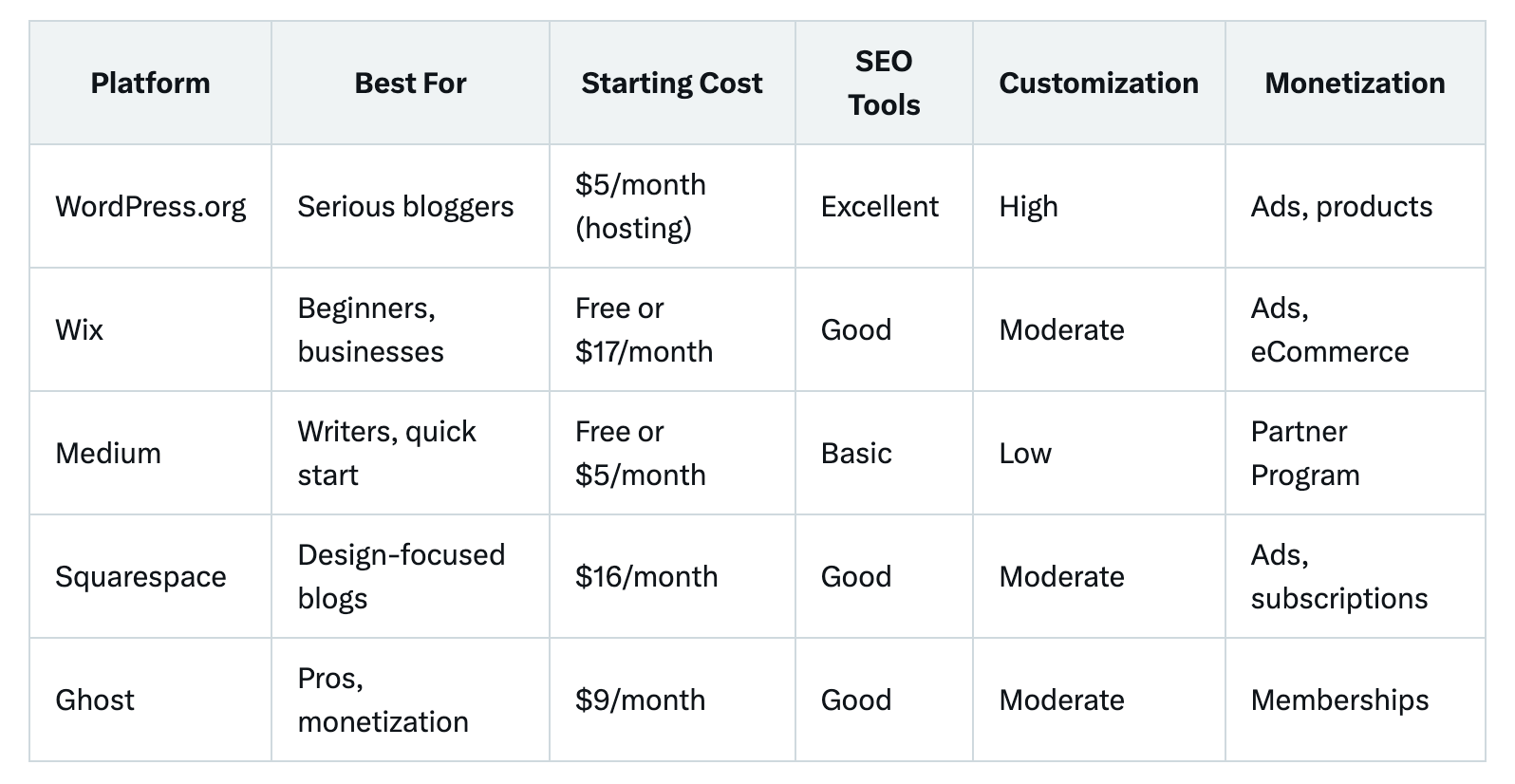
Let’s put these platforms head-to-head to see how they stack up. Each has unique strengths, but your choice hinges on your goals — hobby, business, or quick cash.
Side-by-Side Feature Breakdown
- WordPress.org: King of customization, SEO, and scalability. Needs hosting ($5-$15/month) and some tech skills. Best for serious bloggers.
- Wix: Easiest for beginners, with AI tools and a free plan. Great for small businesses but less flexible than WordPress.
- Medium: Ideal for writers, with a built-in audience and no setup. Limited design control, monetization tied to the Partner Program.
- Squarespace: Tops for design, with premium templates and marketing tools. Starts at $16/month, no free plan.
- Ghost: Fastest and creator-focused, with membership tools. Starts at $9/month, best for pros.
Here’s a quick table for clarity:
Which Platform Suits Your Blogging Goals?
New to blogging? Wix or Medium offers a low learning curve. Want total control and long-term growth? WordPress.org is unmatched. Need a gorgeous, visual blog? Squarespace delivers. For speed and subscriptions, Ghost is your pick. It’s like choosing a meal: a quick snack (Medium), a home-cooked feast (WordPress), or a gourmet dish (Squarespace). Consider your skills, budget, and time commitment to find the perfect fit.
Emerging Trends in Blogging Platforms for 2025
Blogging platforms are evolving faster than fashion trends, driven by tech and user demands. Let’s explore what’s shaping the future.
AI Integration and Automation
AI is the secret weapon of 2025 blogging. Platforms like Wix and WordPress integrate AI to generate content ideas, optimize SEO, or design layouts. For example, Wix’s AI can draft a post about “sustainable travel,” while WordPress plugins like Rank Math use AI to suggest keywords. These tools analyze reader behavior to recommend trending topics, saving you research time. It’s like having a co-writer who’s always one step ahead.
How AI Enhances Content Creation
AI doesn’t just save time — it elevates quality. Tools like Clearscope (integrated with WordPress) spot trending keywords, ensuring your content aligns with search intent. For instance, if “eco-friendly gadgets” is spiking, Clearscope suggests related terms to boost relevance. AI also auto-generates alt text for images, improving accessibility and SEO. But don’t worry — AI enhances your voice, it doesn’t replace it. It’s like a sous-chef prepping ingredients for your culinary masterpiece.
The Role of Mobile Optimization
With over 60% of web traffic from mobile devices in 2025, platforms prioritize responsive designs. Squarespace and Wix lead with templates that adapt seamlessly to phones and tablets. A mobile-friendly blog is non-negotiable — Google’s mobile-first indexing means your rankings depend on it. Imagine losing readers because your blog looks wonky on their phone — it’s like serving a gourmet meal on a cracked plate. Choose a platform that ensures your blog shines on every screen.
How to Get Started with Your Chosen Platform
Ready to launch your blog? Here’s a universal roadmap to get you from zero to published, no matter your platform.
Step-by-Step Setup Guide
- Choose Your Platform: Use our comparison to pick — WordPress.org for flexibility, Wix for ease, etc.
- Sign Up: Create an account. For WordPress.org, grab hosting (Bluehost, $2.95/month) and a domain ($10-$15/year).
- Select a Template: Pick a theme that fits your niche — clean for writing, bold for visuals.
- Customize: Add your logo, colors, and pages (Home, About, Blog). Use drag-and-drop editors for Wix or Squarespace.
- Write Your First Post: Craft a welcome post introducing your blog. Optimize with keywords (e.g., “vegan recipes” for a food blog).
- Promote: Share on Twitter, Instagram, or email newsletters. Engage with readers via comments.
For example, a tech blogger on WordPress.org might install Yoast SEO, choose the Astra theme, and publish a post on “2025 gadget trends,” sharing it on Twitter with #TechNews. It’s like planting a seed and watering it with social media.
Tips for Building a Successful Blog
Consistency is your superpower — post weekly or biweekly to keep readers hooked. Use analytics (built into Wix, Squarespace, or Google Analytics for WordPress) to track what clicks. Engage on social platforms like Twitter to build a community — reply to comments and join conversations. Learn SEO basics with free resources like Moz or SEMrush’s blog. For instance, optimize posts with tools like Ahrefs to target low-competition keywords. It’s like tending a garden: regular care yields a vibrant harvest.
Common Mistakes to Avoid When Blogging
Even the best platforms can’t save you from rookie blunders. Let’s sidestep these traps to keep your blog thriving.
Overcomplicating Your Platform Choice
Don’t get stuck in analysis paralysis. Start with a platform that matches your skill level — Wix for beginners, WordPress.org for pros. You can switch later if needed. For example, a newbie picking Ghost might struggle with hosting, while Medium would let them publish instantly. It’s like choosing a first guitar — start with something you can play, not a custom Stratocaster.
Neglecting SEO and Analytics
Skipping SEO is like baking a cake without sugar — it won’t rise. Use tools like Yoast (WordPress), Squarespace’s built-in SEO, or SEMrush to optimize posts. For instance, a fashion blogger could target “sustainable fashion tips” with proper meta tags. Track performance with Google Analytics or platform dashboards to refine your strategy. Data is your roadmap — ignoring it leaves you lost.
Leveraging SEO Tools for Blogging Success
SEO is the backbone of a successful blog, and 2025’s tools make it easier than ever. Platforms like WordPress.org integrate with powerhouses like Yoast SEO and Rank Math, which guide you through keyword optimization and readability. Wix and Squarespace offer built-in SEO wizards, while Ghost supports tools like Ahrefs for keyword research. Medium relies on its algorithm but benefits from external tools like SEMrush. For example, using Clearscope’s “Trending” tag, a blogger could spot rising keywords like “AI travel planners” and craft timely content. These tools are like a compass, pointing your blog toward Google’s front page.
Monetizing Your Blog in 2025
Making money from your blog is more achievable than ever. WordPress.org and Wix support ads (Google AdSense), affiliate links, and eCommerce. Medium’s Partner Program pays for engagement. Squarespace and Ghost excel at subscriptions and memberships. For instance, a fitness blogger on Ghost could charge $10/month for exclusive workout plans, while a Wix user might sell yoga mats. Combine multiple streams — ads, affiliates, and products — for maximum income. It’s like planting different crops in your garden to ensure a steady harvest.
Scaling Your Blog for Long-Term Success
Once your blog gains traction, it’s time to scale. WordPress.org’s plugins like WooCommerce let you add stores or forums. Wix’s business plans support advanced eCommerce. Squarespace’s email campaigns grow your audience, while Ghost’s newsletters keep subscribers engaged. Use analytics to double down on what works — say, a viral post on “minimalist home decor.” Automate tasks with tools like Buffer for social sharing or Zapier for workflows. It’s like upgrading from a rowboat to a yacht — bigger, faster, and ready for the open sea.
Picking the Perfect Platform for Your Blog
In 2025, blogging is your ticket to sharing ideas, building a brand, or earning a living. The top 5 blogging platforms — WordPress.org, Wix, Medium, Squarespace, and Ghost — cater to every need. WordPress.org offers unmatched flexibility, Wix makes starting a breeze, Medium connects you to readers, Squarespace delivers stunning designs, and Ghost prioritizes speed and monetization. Your choice depends on your skills, goals, and budget. Start simple, create killer content, and leverage SEO tools like Yoast or SEMrush to stand out. The question isn’t can you build a blog — it’s how big will you make it? What’s your first step?
Frequently Asked Questions
FAQ 1: Which Blogging Platform Is Best for Beginners?
Wix and Medium are perfect for newbies. Wix’s drag-and-drop editor and free plan make setup effortless, while Medium lets you write and publish without tech worries. No coding required.
FAQ 2: Can I Make Money with These Platforms?
Absolutely. WordPress.org and Wix support ads, affiliate links, and eCommerce. Medium pays via the Partner Program. Squarespace and Ghost offer subscriptions and memberships. Your audience and strategy determine your earnings.
FAQ 3: Do I Need Coding Skills to Start a Blog?
Nope. Wix, Squarespace, and Medium are code-free. WordPress.org and Ghost offer no-code themes and editors, though coding can unlock extra customization for advanced users.
FAQ 4: How Much Does It Cost to Start a Blog in 2025?
It varies. Medium is free (or $5/month for monetization). Wix has a free plan, with paid plans at $17/month. WordPress.org requires hosting ($5-$15/month) and a domain ($10-$15/year). Squarespace starts at $16/month, Ghost at $9/month.
FAQ 5: Can I Switch Platforms Later?
Yes, but it takes effort. WordPress.org is easiest to migrate to/from due to its flexibility. Wix and Squarespace offer export tools, but Medium may require manual copying. Plan ahead to save time.