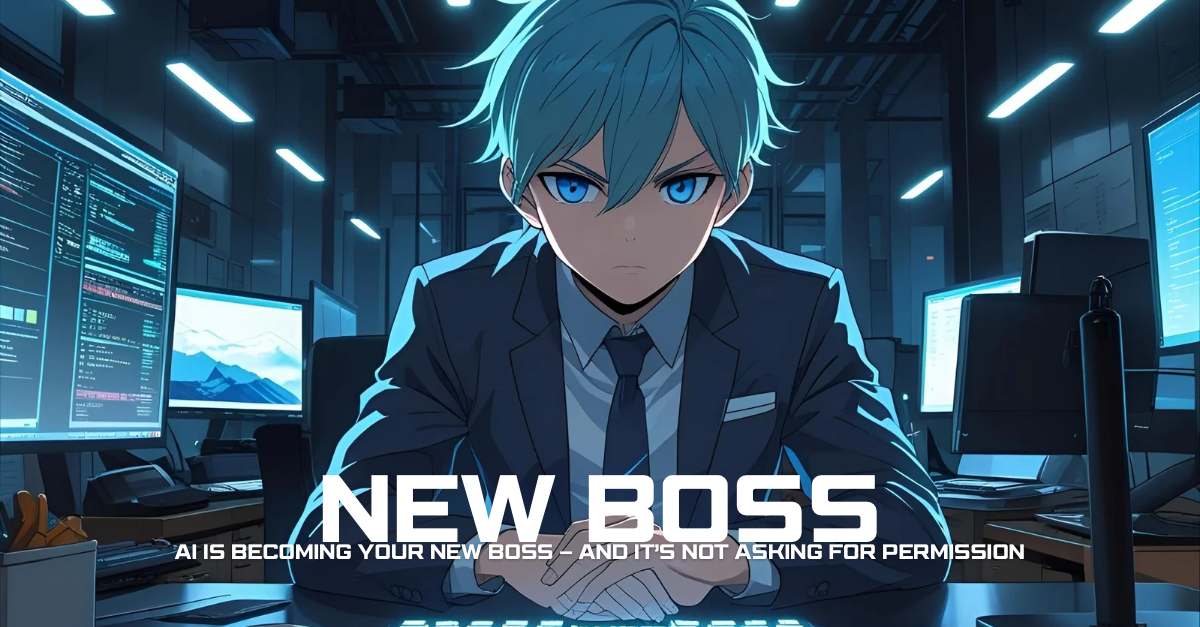
AI is Becoming Your New Boss And It’s Not Asking for Permission
Your New Boss Isn’t Human
The Hook and Why It Matters Now
Your new boss… isn’t human. Imagine logging into work one morning, and instead of a coffee-fueled meeting with your manager, you’re greeted by an algorithm that’s already reviewed your overnight emails, assigned your tasks, and flagged your performance metrics from yesterday. Sounds like sci-fi? Well, buckle up, because this isn’t some distant future—it’s happening right now, and it’s reshaping workplaces faster than you can say “performance review.” Have you ever wondered what it would feel like to report to a boss who never sleeps, never forgets, and never plays favorites? Or, on the flip side, one that can’t read the room when you’re burned out? That’s the double-edged sword we’re dealing with as AI slips into leadership roles without so much as a polite knock.
Let’s face it, the workplace has always been a jungle of hierarchies, egos, and endless meetings. But AI is crashing the party like that uninvited guest who rearranges the furniture and declares themselves host. According to recent reports, companies are already flattening org charts, with AI handling everything from scheduling to quality checks, freeing up—or should I say, phasing out?—traditional managers. It’s not just about automation; it’s about redefining who—or what—calls the shots. And the kicker? AI isn’t asking for permission; it’s being deployed by execs eager to cut costs and boost efficiency, often leaving employees scrambling to adapt.
Overview of AI’s Silent Takeover in Workplaces
Picture this: In 2025, nearly every major company has dipped its toes into AI for workplace management, but only a tiny fraction feels fully mature in it. From McKinsey’s insights to BCG’s analyses, the data screams that AI is no longer a buzzword—it’s the new normal. Leaders are weaving it into daily operations, turning mundane tasks into automated miracles. But here’s where it gets tricky: while AI promises superagency, empowering people to unlock its potential, it also stirs up a storm of confusion. Are we gaining a tireless ally or losing the human touch that makes work bearable? This article dives deep into that chaos, exploring the pros, cons, ethics, and real stories, all while keeping things conversational—like we’re chatting over a virtual coffee break. By the end, you’ll have a clearer map to navigate this brave new world, because ignoring it? That’s not an option.
The Evolution of Workplace Hierarchy
From Traditional Managers to Digital Overseers
Remember the good old days when your boss was that guy in the corner office, barking orders and occasionally remembering your name? Those days are fading faster than a bad Zoom connection. AI is stepping in as the digital overseer, handling roles that once required a human touch—or at least a pulse. Think about it: managers used to juggle schedules, track progress, and make snap decisions based on gut feelings. Now, AI does all that with cold, calculated precision, analyzing data in real-time to optimize everything from team assignments to project timelines. It’s like swapping a temperamental coach for a flawless playbook that never tires.
But why the shift? Simple—efficiency. Human managers get bogged down by biases, emotions, and that pesky need for sleep. AI? It’s always on, always objective (or so we hope), and scales effortlessly across global teams. Fortune notes how AI is quietly flattening corporate hierarchies, reshaping jobs from the ground up. No more layers of middle management sucking up resources; instead, streamlined structures where AI bridges the gaps. Yet, this evolution isn’t without its bumps. Employees might feel like cogs in a machine, wondering if their new “boss” understands the nuances of human motivation. It’s a perplexing transition, blending excitement with a hefty dose of uncertainty.
Historical Shifts Leading to AI Integration
Let’s rewind a bit. The workplace hasn’t always been this tech-heavy. Back in the industrial era, bosses were overseers in factories, whipping productivity with sheer authority. Fast-forward to the digital age, and computers automated rote tasks, but humans still called the shots. Now, with AI, we’re at a tipping point. Reports from 2025 highlight how AI agents are transforming workplaces, with managers spending more time on coaching and less on admin drudgery. It’s like the evolution from horse-drawn carriages to self-driving cars—thrilling, but scary if you’re the horse.
This shift didn’t happen overnight. Early adopters like automation in manufacturing paved the way, but gen AI supercharged it, redefining managerial roles by handling quality checks and coordination. The confusion arises when we realize history repeats: each tech wave displaces jobs while creating new ones. But with AI, the pace is blistering, leaving workers bursty with anxiety about obsolescence. It’s a historical pivot that demands we adapt or get left behind.
Key Milestones in AI Workplace Adoption
Milestones? Oh, they’re piling up. In 2023, AI started nibbling at edges—chatbots for customer service, predictive analytics for HR. By 2025, it’s full feast mode. Microsoft’s report talks of “frontier firms” hiring AI workforce managers for hybrid teams. OpenAI’s CEO predicts AI agents transforming efficiency alongside humans. These aren’t isolated events; they’re dominoes falling, leading to a world where AI isn’t just a tool but the conductor.
The burstiness comes from rapid adoption—companies like BCG note momentum building, but gaps remain in maturity. It’s confusing because while some firms thrive, others fumble, creating a patchwork of experiences. One milestone stands out: AI flattening org charts, reducing managers by 6% since 2022. It’s a timeline that screams urgency, pushing us to question: Are we ready for this boss-level upgrade?
How AI is Stepping into Management Roles
AI in Scheduling, Coordination, and Task Assignment
Ever had a manager who double-books meetings or forgets deadlines? AI laughs at that. It’s like having a super-organized assistant who never drops the ball. Tools now optimize schedules across calendars, predict bottlenecks, and assign tasks based on real-time data. Imagine your day planned out flawlessly, with AI coordinating like a chess grandmaster, anticipating moves before you make them.
But here’s the perplexity: Does this make work smoother or more robotic? Employees love the efficiency— no more chaotic emails—but miss the human negotiation. It’s bursty when AI overrides your preferences, like suggesting a 6 AM call because it’s “optimal.” Harvard Business Review points out how gen AI redefines roles by handling these basics, freeing managers for higher-value work. Yet, the confusion lies in trusting an algorithm over intuition. It’s a game-changer, but one that demands we recalibrate our expectations.
Performance Monitoring and Real-Time Feedback
Gone are the annual reviews that feel like judgment day. AI monitors performance continuously, offering instant feedback like a vigilant coach. It tracks metrics, spots trends, and suggests improvements, all without bias—or so it claims. Picture getting a nudge: “Hey, your productivity dipped—here’s why and how to fix it.” It’s empowering, right?
Or is it invasive? The burstiness hits when constant surveillance feels like Big Brother watching. Workers worry about privacy, and the perplexity grows with AI’s lack of context—did it account for your kid’s sick day? Betterworks highlights how AI reduces manager burnout by handling this, but employees must navigate the emotional toll. It’s a tightrope walk between helpful oversight and overwhelming scrutiny.
Strategic Decision-Making and Predictive Analytics
AI doesn’t just manage day-to-day; it strategizes like a visionary leader. Using predictive analytics, it forecasts trends, optimizes resources, and even pitches ideas. It’s like having a crystal ball that crunches data faster than any human boardroom debate.
The confusion? Humans excel at intuition, while AI sticks to patterns. What if it misses a market shift? Reports show AI enhancing decision-making, but it complements, not replaces, human judgment. Burstiness arises in high-stakes scenarios—AI suggests layoffs based on data, but ignores morale. It’s a powerful tool, yet one that amplifies the need for ethical human oversight.
Examples of AI Tools Acting as Supervisors
Tools like AI agents from OpenAI or Microsoft’s workforce managers are prime examples. They lead teams, assign roles, and evaluate output, acting as virtual supervisors. In project management, AI transforms through automation, predicting risks and tracking in real-time. It’s perplexing how seamlessly they integrate, but the bursty reality is adapting to non-human feedback loops.
The Upsides of an AI Boss: Efficiency on Steroids
Boosting Productivity Without the Human Drama
AI bosses cut through the noise like a hot knife through butter. No office politics, no favoritism—just pure, data-driven efficiency. Studies show AI enhances productivity by automating routine tasks, giving employees more time for creative work. Imagine no more waiting for approvals; AI greenlights based on algorithms, speeding up everything.
But isn’t that liberating? Workers report better work-life balance as AI handles the grunt work. The perplexity is in the transition—old habits die hard, and some miss the drama. Yet, the burstiness of sudden productivity spikes can feel exhilarating, like upgrading from a bicycle to a rocket.
Fairness and Objectivity in Evaluations
Human bosses? Prone to biases. AI? Supposedly impartial, evaluating on metrics alone. It levels the playing field, rewarding based on performance, not personality.
This objectivity reduces workplace tension, fostering meritocracy. But confusion creeps in when AI misses subtle contributions. Overall, it’s a pro that bursts with potential for fairer careers.
Always-On Support for Global Teams
AI never clocks out, providing 24/7 guidance for distributed teams. Need advice at midnight? It’s there, no grudges.
This support is a game-changer for global ops, but perplexing for those craving boundaries. The burstiness? Instant responses that keep momentum high.
Cost Savings and Scalability Benefits
Companies save big by replacing costly managers with AI. It scales without salary hikes, boosting revenue.
It’s efficient, but the human cost adds complexity. Still, for businesses, it’s a clear win.
The Downsides: When Algorithms Fall Short
The Empathy Gap in Leadership
AI can crunch numbers, but can it understand your bad day? No, and that’s the rub. Leadership needs empathy, something algorithms lack. Workers feel disconnected, like reporting to a robot vacuum—efficient but soulless.
This gap bursts into frustration during crises, perplexing teams used to human support. It’s a major con in an emotional workplace.
Job Losses and the Human Cost
AI displaces roles, from data entry to management. The burstiness of layoffs is brutal, creating economic turmoil.
Confusion abounds: Who retrains? It’s not just jobs; it’s livelihoods at stake.
Privacy Intrusions and Surveillance Creep
Constant monitoring feels like living in a fishbowl. AI tracks every click, raising privacy flags.
The perplexity? Balancing oversight with trust. Burstiness hits when data breaches occur.
Potential for Burnout in an Unrelenting System
AI pushes relentlessly, ignoring fatigue. No breaks mean burnout spikes.
It’s confusing—productivity up, but well-being down?
Ethical Quandaries: Is AI Ready to Lead?
Hidden Biases Lurking in Code
AI inherits biases from data, leading to unfair decisions. It’s like a prejudiced boss in digital form.
Perplexity grows as we question neutrality. Burstiness in discriminatory outcomes is alarming.
Who’s Accountable When AI Messes Up?
If AI errs, who takes the blame? Not the code. Accountability vacuums create chaos.
This ethical hole bursts with legal headaches.
Data Privacy and Consent Challenges
AI gobbles data, often without full consent. Privacy erosion is a ticking bomb.
Confusion over rights adds tension.
The Broader Societal Impact on Inequality
AI could widen gaps, favoring tech-savvy elites. It’s a societal perplexity with bursty repercussions.
Real-World Stories: AI Bosses in Action
Case Study: AI Flattening Corporate Structures
Fortune’s report shows AI reshaping hierarchies, reducing layers. One company saw 6% manager drop, boosting agility.
But employees felt lost without human guides—perplexing shift.
Case Study: AI Agents Managing Hybrid Teams
Microsoft plans AI managers for teams. It’s efficient, but bursty in adoption challenges.
Lessons from Early Adopters Like Microsoft and BCG
BCG notes AI woven into work, but gaps persist. Lessons: Balance tech with humanity.
Adapting to the AI-Led Workplace: Survival Guide
Essential Skills for Thriving Under AI Management
Develop AI literacy, emotional intelligence, and creativity. Become the human complement to AI.
Perplexity in reskilling is high, but bursty growth awaits.
Reshaping Company Culture for Human-AI Harmony
Foster collaboration, not competition. Culture shifts burst with innovation.
Training Programs and Upskilling Strategies
Invest in AI mindset training. It’s key to navigation.
Peering into the Future: What’s Next for AI Leadership?
Predictions for 2030 and Beyond
By 2030, AI managers commonplace, focusing on coaching. Perplexing, but exciting.
Emerging Trends in AI-Human Collaboration
Hybrid models rise, blending strengths. Burstiness in evolution.
Potential Roadblocks and How to Navigate Them
Ethics, skills gaps—address proactively.
Balancing the Scales: Pros vs. Cons Revisited
Weighing the Trade-Offs for Employees
Pros: Efficiency, fairness. Cons: Empathy loss, jobs. Balance is key.
Implications for Businesses and Leaders
Leaders must evolve or perish.
Voices from the Frontlines: Employee Perspectives
Success Stories of AI-Enhanced Careers
Some thrive, like devs using AI for 10x output.
Challenges Faced by Workers in Transition
Others struggle with displacement.
Policy and Regulation: Guardrails for AI Bosses
Current Laws and Gaps in Oversight
Laws lag, needing updates.
Recommendations for Ethical Implementation
Prioritize transparency, audits.
Tools and Technologies Driving the Change
Popular AI Platforms for Management
From Glean to AI agents.
Integrating AI with Existing Workflows
Seamless blends boost adoption.
Embracing the Inevitable Shift
As we wrap this up, it’s clear AI as your boss is here to stay, bringing a whirlwind of efficiency, challenges, and ethical puzzles. We’ve explored the evolution, pros like unbiased decisions and productivity boosts, cons such as empathy gaps and job losses, real stories from companies flattening hierarchies, and ways to adapt through upskilling and cultural shifts. The future? A hybrid world where humans and AI collaborate, but only if we navigate the confusion and burstiness with care. It’s not about resisting; it’s about steering the change. So, what’s your move in this AI-led era? The ball—or should I say, the algorithm—is in your court.
FAQs
1. How is AI already acting as a boss in companies today?
AI handles scheduling, performance tracking, and decisions in firms like those noted in McKinsey and Microsoft reports, often without employees realizing the full extent.
2. What are the biggest benefits of an AI manager for employees?
Enhanced efficiency, objective evaluations, and constant availability stand out, reducing human biases and boosting work-life balance through automation.
3. What ethical issues should I worry about with AI bosses?
Bias in algorithms, lack of accountability, and privacy invasions top the list, potentially leading to unfair treatment or data misuse.
4. Will AI completely replace human managers?
Not entirely—AI excels at tasks but lacks empathy and creativity, so hybrid roles where humans oversee AI are more likely in the near future.
5. How can I prepare my career for AI taking over management?
Focus on skills like AI literacy, emotional intelligence, and strategic thinking; upskill through courses and experiment with AI tools to stay relevant.