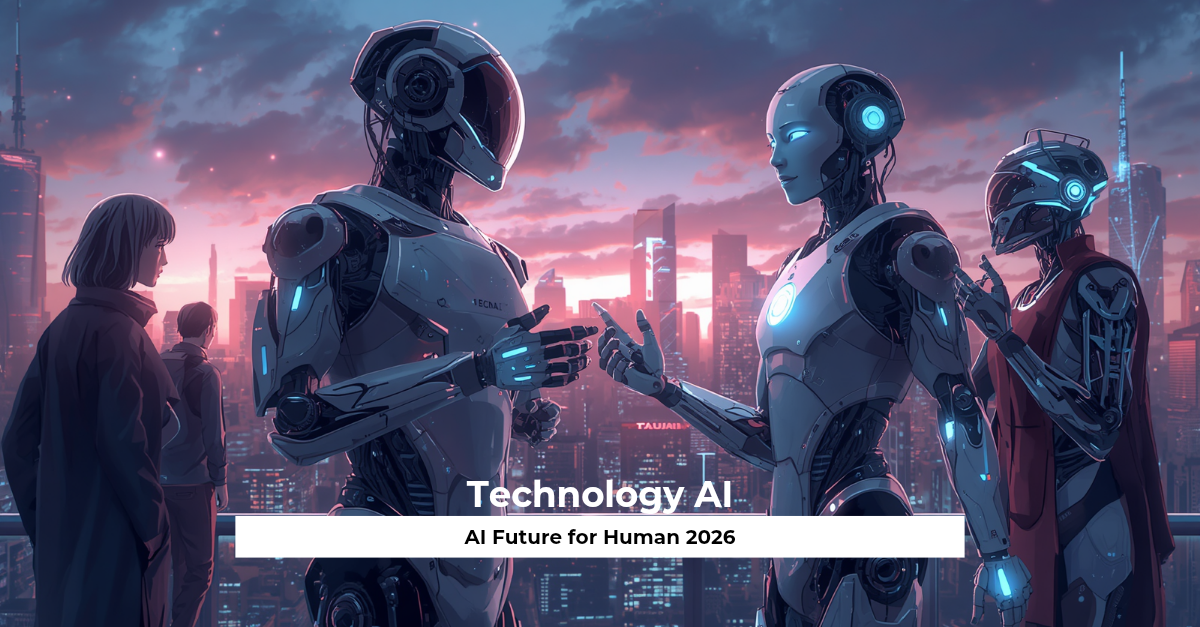
AI Future for Human 2026
The future isn’t some distant sci-fi dream waiting on the horizon. It’s already under construction, line by line of code, breakthrough by breakthrough, and decision by decision. Every day, innovators, developers, entrepreneurs, and everyday creators are shaping tomorrow’s world with artificial intelligence, emerging technologies, and bold ideas.
The big question echoing across tech communities is simple yet powerful: Are you building it—or watching it happen? In this article, we’ll explore what this really means in 2026, why it matters for regular people like you and me, and how you can stop being a passive observer and start actively participating in the future. Whether you’re curious about AI, passionate about innovation, or just looking for inspiration to level up your skills, you’ll walk away with practical insights and motivation to take that first step.
The pace of change today is breathtaking. What felt like futuristic concepts just a few years ago—intelligent assistants that understand context, generative tools that create art and code, and systems that predict needs before we even voice them—are now everyday realities. Companies and individuals alike are no longer waiting for the future; they’re engineering it in real time.
If you’ve ever felt overwhelmed by headlines about AI taking jobs or automation transforming industries, you’re not alone. Many people scroll through tech news feeling like spectators in a game they can’t join. But here’s the empowering truth: the tools to build the future have never been more accessible. From open-source AI models to no-code platforms, the barriers to entry are lower than ever. This isn’t just for Silicon Valley elites anymore. It’s for teachers, freelancers, students, and side-hustlers who want to create something meaningful.
Why the Future Feels Like It’s Already Here
We live in an era where technology evolves faster than cultural narratives can keep up. Remember when ChatGPT launched and suddenly everyone was talking about generative AI? That was just the beginning. By 2026, AI has woven itself into nearly every industry: healthcare diagnostics that catch diseases early, personalized education platforms that adapt to each learner’s pace, autonomous systems optimizing logistics and reducing waste, and creative tools empowering artists to experiment like never before.
The statement “The future isn’t coming. It’s already being built” captures this shift perfectly. Innovation isn’t a future event—it’s a present process. Engineers at startups and big tech firms are deploying models that learn from vast datasets, while independent creators on platforms like GitHub and Hugging Face are fine-tuning their own versions.
Consider climate tech: AI-driven models now predict weather patterns with stunning accuracy and optimize renewable energy grids. In finance, algorithmic trading and fraud detection systems operate at speeds no human could match. Even in entertainment, recommendation engines and generative content tools shape what we watch, read, and listen to.
This rapid building phase creates both excitement and anxiety. On one hand, it promises solutions to humanity’s biggest challenges—poverty, disease, environmental degradation. On the other, it raises valid questions about ethics, job displacement, and who controls these powerful technologies. The key difference between builders and watchers is mindset. Builders see opportunity where others see disruption. They experiment, learn from failures, and iterate quickly.
The Mindset Shift: From Consumer to Creator
Switching from watching to building starts with mindset. Many people consume tech news passively—reading articles, liking posts, maybe sharing them—but never apply the knowledge. Builders, however, treat information as raw material. They ask: “How can I use this?”
For beginners, this shift can feel intimidating, but it doesn’t have to. Start small. Dedicate 30 minutes a day to learning a new tool. Platforms like Coursera, freeCodeCamp, or even YouTube tutorials make high-quality education available at zero cost. Focus on one area that genuinely interests you—perhaps prompt engineering for AI, building simple web apps, or creating digital art with generative tools.
Real-world example: Sarah, a former teacher in Bangkok, learned basic Python and AI prompting in her spare time. Within months, she developed an educational chatbot that helps local students practice English conversation. What started as a personal project now supports dozens of learners and generates a side income. She didn’t wait for permission or perfect conditions—she started building.
Another story comes from Alex, a marketing professional who used no-code tools like Bubble and AI writing assistants to launch a niche e-commerce site. By leveraging automation for customer service and content creation, he scaled the business while keeping his day job. These aren’t rare unicorn stories; they represent the new normal for proactive individuals.
Practical Ways to Start Building Your Future Today
You don’t need a computer science degree or massive funding to participate. Here are actionable steps anyone can take:
1. Master AI Tools That Multiply Your Output
Tools like Grok, Claude, Midjourney, and GitHub Copilot can dramatically boost productivity. Learn prompt engineering—the art of asking AI the right questions. A well-crafted prompt can generate code, marketing copy, business plans, or even help debug problems. Practice daily by challenging yourself to automate one repetitive task.
2. Build in Public and Leverage Communities
Share your learning journey on X (formerly Twitter), LinkedIn, or Reddit. Communities like r/MachineLearning, Indie Hackers, and AI-focused Discord servers provide feedback, collaboration opportunities, and even potential partnerships. Building in public also builds your personal brand, which opens doors unexpectedly.
3. Experiment with Side Projects
Ideas are cheap—execution is everything. Start a small project aligned with your skills or passions. It could be an AI-powered personal finance tracker, a content generator for your blog, or a simple mobile app solving a local problem. The goal isn’t perfection; it’s learning through doing.
4. Stay Updated Without Overwhelm
Follow credible sources for tech news and innovation updates. Curate a list of newsletters, podcasts, and YouTube channels that deliver digestible insights. Set boundaries to avoid doom-scrolling—dedicate specific time slots for learning.
5. Focus on Human-AI Collaboration
The future belongs to those who combine human creativity, empathy, and ethics with AI’s computational power. Builders understand that technology augments human potential rather than replaces it. Develop soft skills like critical thinking, communication, and adaptability alongside technical ones.
Innovation thrives when diverse perspectives contribute. People from non-technical backgrounds often bring unique insights that pure coders miss—think healthcare workers improving medical AI or artists guiding ethical creative tools.
Overcoming Common Barriers
Many aspiring builders face similar obstacles: fear of failure, lack of time, or imposter syndrome.
• Fear of Failure: Treat experiments as learning opportunities. Most successful projects emerge after several iterations. Thomas Edison’s famous quote about finding 10,000 ways that won’t work applies perfectly here.
• Time Constraints: Start with micro-habits. Even 15-20 minutes daily compounds into significant progress over months. Use techniques like the Pomodoro method to maintain focus.
• Resource Limitations: Many powerful AI tools offer generous free tiers. Open-source options reduce costs dramatically. Cloud platforms like Google Colab provide free computing resources for experimenting with models.
• Keeping Up with Rapid Change: Accept that continuous learning is the new normal. Rather than trying to know everything, focus on core principles and adaptability.
The digital divide is narrowing, but action remains the great equalizer. Those who start today, even imperfectly, will be far ahead of those waiting for the “right time.”
Real Impact Stories Shaping 2026
Across the globe, individuals and small teams are making waves. Open-source contributors improve foundational AI models used by millions. Citizen scientists use AI to analyze environmental data and advocate for policy changes. Entrepreneurs in emerging markets build localized solutions—agritech apps helping farmers optimize yields or health tools tailored to regional needs.
In education, teachers collaborate with AI to create personalized lesson plans, freeing up time for mentorship. In creative fields, musicians and writers use generative tools to overcome blocks and explore new genres. These stories illustrate that building the future is inclusive—it rewards curiosity and persistence more than elite credentials.
The Ethical Dimension: Building Responsibly
As we construct tomorrow, responsibility matters. Builders must consider bias in AI systems, data privacy, environmental impact of training large models, and potential misuse. Engaging with these issues—through reading, discussion, and thoughtful implementation—strengthens both your projects and the broader ecosystem.
Organizations and individuals championing transparent, fair, and sustainable innovation set positive examples. By prioritizing ethics early, you future-proof your work and contribute to technology that benefits humanity as a whole.
Taking Your First Step Today
The gap between watching and building is smaller than it appears. It starts with a decision: today, I will create something. Download a free tool, join a community, or outline a simple project. Momentum builds quickly once you begin.
Remember, the future is collaborative. Your unique contribution—whether a small script, insightful content, or innovative application—adds to the collective progress. Don’t underestimate your potential to influence the direction of technology.
The builders shaping 2026 aren’t necessarily the loudest voices or the most resourced. They’re the consistent ones, the curious ones, the ones willing to ship imperfect versions and improve iteratively. You can be one of them.
So, ask yourself again: Are you building the future—or watching it happen? The tools, knowledge, and opportunities are here. The only missing piece is your action. Start small, stay consistent, and watch your creations help shape a better tomorrow.
#AIBuildingFuture #FutureTech2026 #InnovationMindset #DigitalTransformation #AIForEveryoneWhat if your next coworker isn’t human at all — but an AI agent working quietly in the background, 24/7? The real question for 2026 isn’t whether AI will take your job. It’s how well you’ll learn to work with it.
An in-depth look at the AI future for humans in 2026 — agentic AI, shifting jobs, essential skills, and how to thrive in the human-AI era.
Business analysts describe 2026 as the year AI stopped being a novelty and became infrastructure — quietly sitting inside workflows rather than sitting on the side as an experiment. Organizations are increasingly deploying AI agents capable of handling multi-step tasks with less human intervention at every stage. The question workers are asking has shifted from “what is AI?” to “where do I fit into this?”
The real shift in 2026 is that AI has moved from answering questions to acting as an agent — planning, deciding, and executing multi-step work with far less hand-holding. Microsoft’s leadership has framed the next wave as genuine collaboration rather than replacement, describing AI agents as digital coworkers that help small teams punch above their weight. A three-person team, in this vision, could launch a global campaign in days: AI handles data and content generation, while people steer strategy and creative direction.
Analysts also caution that the gap between AI hype and proven business value remains wide — many organizations are still learning how to turn AI investment into measurable results, which means the transition is real but uneven across industries.
Repetitive, rule-based work — basic customer support, data entry, document summarization — is where AI agents are being adopted fastest. Roles that depend on complex judgment, creativity, relationship-building, and ethical decision-making remain firmly human territory. The World Economic Forum projects that by 2030, job disruption will touch a meaningful share of all roles, but with more new positions created than eliminated overall — concentrated in technology, data, healthcare, education, and the green economy. Demand for workers with AI-related skills has also been growing quickly, reflecting how fast employers are trying to fill the collaboration gap.
AI literacy — enough fluency to use AI tools, ask good questions, and critically interpret outputs
Workflow redesign, not just tool adoption — rethinking how work is structured rather than bolting AI onto old processes
Distinctly human skills AI struggles to replicate — storytelling, negotiation, empathy, and judgment under uncertainty
Learning agility — Harvard Business School faculty note that organizations built to reward learning speed, not just output, are the ones best positioned to adapt
Treating AI purely as a threat instead of a capability multiplier
Cutting jobs based on AI hype before productivity gains are actually proven — Gartner research indicates a large share of AI-linked layoffs were not driven by demonstrated output gains
Deploying AI without oversight, quality checks, or human review of outputs
Failing to invest in employee upskilling alongside AI rollout
Analysts expect 2026 to be defined by agentic AI (more autonomous systems), “invisible AI” woven so deeply into everyday tools it becomes unnoticeable, and greater multimodal integration across text, voice, and vision. At the same time, some leading researchers argue that large language models alone may not be sufficient for human-level general intelligence, pointing instead toward “world models” that simulate real-world understanding — meaning the technical path forward is still actively being debated, not settled.
The future of AI and humans isn’t a zero-sum contest — it’s about finding where each side does what it does best. AI handles scale, repetition, and rapid analysis; humans bring judgment, creativity, and relationships. The people who thrive this decade will be the ones who learn to work with AI — neither avoiding it nor deferring to it without question.
Will AI completely replace my job?
Full replacement is uncommon — most roles are being reshaped, with some tasks automated and the remaining human tasks becoming more valuable.
Where should I start learning AI skills?
Start by using AI tools in your actual daily work, then practice asking good questions and critically checking the outputs.
Which careers are safest from AI disruption?
Roles requiring complex judgment, human relationships, and high ethical stakes — such as healthcare, education, and negotiation-heavy work — remain comparatively resilient.
Don’t wait for AI to arrive before adapting. Start today — bring AI into one small part of your workflow and see how it reshapes the way you work.
#AIFuture #FutureOfWork #TechTrends2026