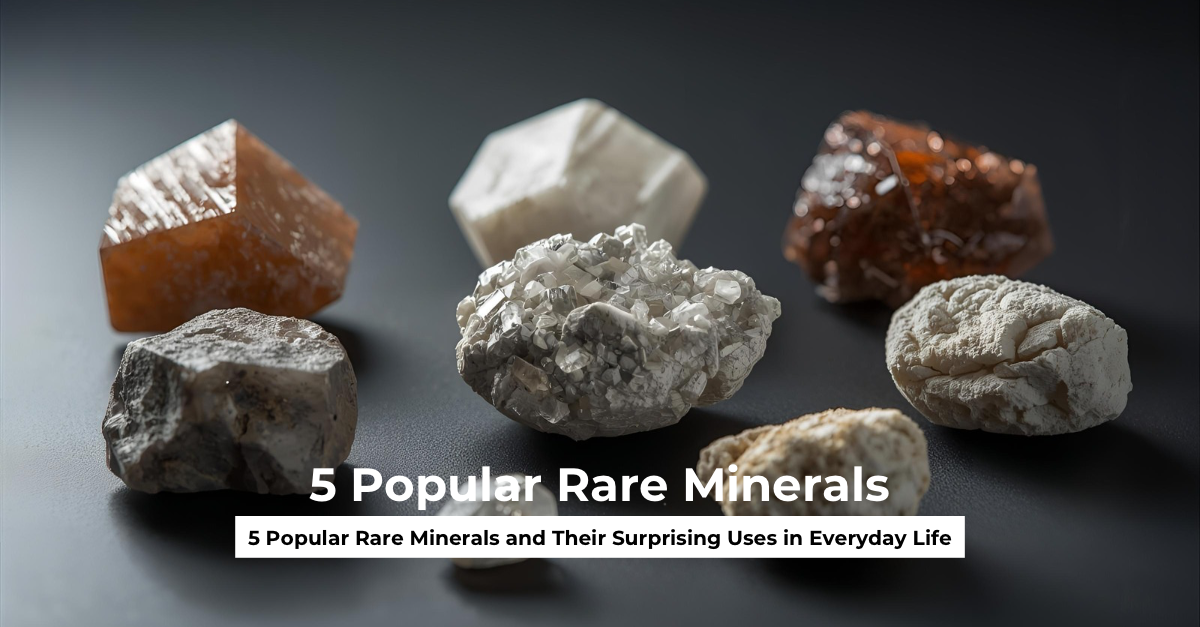
5 Popular Rare Minerals and Their Surprising Uses in Everyday Life
Hey there, have you ever stopped to think about the hidden heroes powering your smartphone, your car, or even the lights in your home? I’m talking about rare earth minerals—those elusive elements tucked away in the Earth’s crust that make modern life tick. They’re not as flashy as gold or diamonds, but without them, our world would look a lot different. In this deep dive, we’ll explore five popular ones: neodymium, cerium, lanthanum, praseodymium, and yttrium. These aren’t just scientific curiosities; they’re woven into the fabric of your daily routine in ways that might blow your mind. Stick with me as we uncover their stories, from how they’re mined to the surprising spots they pop up in your life. Who knows, by the end, you might see your gadgets in a whole new light.
Rare Earth Minerals
Let’s start at the beginning, shall we? Rare earth minerals, often called rare earth elements or REEs, are a group of 17 chemically similar metals that play starring roles in high-tech applications. Despite the name, they’re not super rare in terms of abundance—they’re scattered throughout the planet’s crust. But extracting them? That’s where the challenge lies. They’re usually mixed with other minerals, making mining a tricky, resource-intensive process. Think of them like that one ingredient in your favorite recipe that’s hard to find but changes everything when you add it.
These elements have unique magnetic, luminescent, and catalytic properties that make them indispensable. From powering electric vehicles to lighting up your TV screen, they’re the quiet enablers of innovation. But why do we care so much now? Well, as we shift toward greener tech and smarter devices, demand is skyrocketing. According to recent reports, global needs could triple by 2035, pushing us to think harder about sustainable sourcing. It’s a bit like realizing your coffee habit is unsustainable—you love it, but you need to find better ways to get your fix.
In everyday terms, these minerals touch everything from healthcare to entertainment. Ever wondered how your phone’s speaker delivers crystal-clear sound? Or why your car’s exhaust isn’t as polluting? Yep, rare earths are behind that magic. But before we dive into specifics, let’s clear up what makes them “rare” and why they’re worth your attention.
What Makes Them “Rare”?
Okay, confession time: rare earth minerals aren’t actually that rare. Cerium, for instance, is about as common as copper in the Earth’s crust. So why the misleading name? It dates back to the 18th and 19th centuries when scientists first isolated them from rare minerals like cerite. Back then, they seemed scarce because they were hard to separate from each other due to their similar chemical behaviors. It’s like trying to pick out identical twins in a crowd—confusing and time-consuming.
The real rarity comes from economically viable deposits. Most are found in China, which dominates production at over 80% of the global supply. Other spots include Australia, the US, and Myanmar, but mining them involves complex processes that can be environmentally messy. Picture digging through tons of rock just to get a handful of usable material. That’s the burstiness—sudden surges in effort for sporadic rewards. And the perplexity? Well, their atomic structures allow them to bond in ways that enhance other materials, but that same complexity makes purification a headache.
Understanding this helps explain the high stakes. As demand grows for things like wind turbines and smartphones, supply chains get strained, leading to price fluctuations and geopolitical tensions. It’s a reminder that even in our tech-driven world, we’re still tied to the Earth’s whims.
Why Are They So Crucial in Modern Life?
Imagine a day without your phone vibrating, your car starting smoothly, or your lights flickering on with a switch. Rare earth minerals make all that possible. Their importance stems from properties like strong magnetism and efficient energy transfer, which amplify performance in tiny amounts. For example, adding just a bit to alloys can make them stronger or more heat-resistant, like sprinkling magic dust on everyday metals.
In the bigger picture, they’re key to the green transition. Electric vehicles, solar panels, and wind farms rely on them for efficient motors and generators. Without rare earths, our push for sustainability would stall. But it’s not all rosy—mining impacts ecosystems, and recycling rates are low, around 1%. This creates a perplexing dilemma: we need them to save the planet, but getting them can harm it. Burstiness shows up in market booms, like when EV sales spike, driving up prices.
On a personal level, they’re in your headphones, medical scanners, and even fertilizers. They’re the unsung backbone of convenience, making life smoother without us noticing. As we explore each one, you’ll see how they blend into your routine in surprising ways.
Neodymium: The Powerhouse Behind Magnets
Ah, neodymium— if rare earths had a rockstar, this would be it. Known for its incredible magnetic strength, neodymium is the go-to for anything needing a powerful pull in a small package. It’s like the espresso shot in your tech latte: compact but potent. Found in ores like monazite and bastnasite, it’s extracted through complex chemical processes that separate it from its rare earth cousins.
What makes neodymium stand out? Its ability to create super-strong permanent magnets when alloyed with iron and boron. These NdFeB magnets are up to 10 times stronger than traditional ones, packing a punch in minimal space. But handle with care—it’s reactive, tarnishing in air and even igniting if powdered. Safety first, right?
In demand terms, neodymium tops the charts at 33% of REE usage, driven by tech and energy sectors. As we lean into EVs and renewables, its role only grows. But let’s peel back the layers: from expected industrial uses to those sneaky everyday surprises.
Discovery, Properties, and Basics
Neodymium’s story kicks off in 1885 when Austrian chemist Carl Auer von Welsbach separated it from praseodymium—its “twin” element. The name comes from Greek words meaning “new twin,” highlighting that sibling-like similarity. Properties-wise, it’s a silvery metal that’s soft enough to cut with a knife but boasts unpaired electrons that give it magnetic superpowers.
At room temperature, it’s paramagnetic, but cool it down, and it turns ferromagnetic. It melts at 1,021°C and has a density of about 7 grams per cubic centimeter—dense but not lead-heavy. Chemically, it forms +3 oxidation states, making it versatile in compounds.
Mining mostly happens in China, with the US and Australia ramping up. The process involves crushing ore, then using acids and solvents to isolate it—perplexing chemistry at play. Burstiness? Supply can fluctuate with trade policies, causing price spikes. Knowing these basics sets the stage for why it’s everywhere.
Industrial Applications You Might Expect
In industry, neodymium shines in high-stakes roles. It’s crucial for wind turbine generators, where its magnets enable efficient energy conversion. Picture massive blades spinning, thanks to neodymium’s torque. In manufacturing, it’s in hard drives for precise data reading—though SSDs are changing that.
Electric motors in factories use it for reliability under stress. Defense tech, like missile guidance, relies on its precision. These uses aren’t surprising if you’re in the know, but they underscore neodymium’s reliability. As industries go green, expect more demand, adding burstiness to markets.
In Electronics and Gadgets
Dive into your pocket—your smartphone’s vibration motor? Neodymium magnets make it hum quietly yet powerfully. Headphones deliver bass because of them, turning electrical signals into sound waves with finesse. Laptops and tablets use them in speakers and hinges for that satisfying click.
In gaming consoles, controllers vibrate realistically thanks to these magnets. It’s like having a tiny powerhouse ensuring your tech feels alive. The perplexity is in miniaturization—how something so small handles big jobs. Without neodymium, gadgets would be bulkier and less efficient.
Boosting Renewable Energy
Renewables owe a lot to neodymium. In EVs, its magnets drive motors with high efficiency, extending battery life. Tesla and others swear by them for performance. Wind farms use them in direct-drive turbines, reducing maintenance needs.
Solar trackers employ them for precise panel positioning. It’s a burst of innovation, where neodymium helps harness nature’s power. But supply concerns add perplexity—can we mine enough without environmental fallout? It’s a balancing act for a sustainable future.
Surprising Ways Neodymium Sneaks into Your Daily Routine
Now for the fun part: surprises! Ever used a magnetic therapy bracelet for pain relief? Neodymium’s there, claiming to improve circulation—though science is mixed. In your fridge, those strong door seals? Often neodymium-enhanced for better energy efficiency.
DIY enthusiasts love them for holding tools or creating custom mounts. Think of a magnetic knife strip in your kitchen—practical and space-saving. In medicine, MRI machines use massive neodymium magnets for detailed scans, literally seeing inside you.
Even in hobbies like model building, they hold pieces without glue. Or in fishing, magnetic lures retrieve lost gear. It’s like neodymium is the secret glue of convenience, popping up where you least expect. Who knew your daily life had so much magnetic magic?
Cerium: The Unsung Hero of Clean Air and Sparkles
Moving on to cerium, the most abundant rare earth and a true workhorse. It’s like that reliable friend who’s always there but never seeks the spotlight. Silvery-white and malleable, cerium ignites easily when scratched, making it perfect for flints in lighters. Extracted from similar ores as neodymium, it’s 32% of REE demand, thanks to its catalytic prowess.
Properties include multiple oxidation states (+3 and +4), allowing it to shuttle oxygen in reactions. It melts at 795°C and is denser than water. Mining is widespread, but environmental regs are tightening. Cerium’s versatility makes it essential, but let’s explore its layers.
History and Key Characteristics
Discovered in 1803 by Swedish chemists, cerium was named after the asteroid Ceres. It’s the gateway to the lanthanide series, with atomic number 58. Key trait: autoignition in powder form, hence its use in sparks.
Chemically, it’s reactive, forming oxides that are stable and useful. In nature, it’s in minerals like bastnasite. The perplexity lies in its dual states, enabling unique reactions. Burstiness? Demand surges with auto industry growth.
Common Uses in Industry
Industry loves cerium for catalysis. In petroleum refining, it cracks heavy oils into gasoline efficiently. Glass manufacturing uses it as a decolorizer, removing iron tints for crystal clarity.
In alloys, it boosts strength and corrosion resistance. Ceramics get harder with cerium additions. These uses are foundational, supporting bursty economic sectors like energy.
Catalytic Converters in Cars
Your car’s exhaust system? Cerium’s the star in catalytic converters, converting harmful gases into harmless ones. It stores and releases oxygen, making reactions faster. Without it, air pollution would skyrocket.
In diesel engines, it reduces particulates. As emissions standards tighten, cerium’s role bursts forward. It’s perplexing how such a small amount cleans so much air.
Polishing and Glass Making
Ever admired a spotless lens? Cerium oxide polishes glass to perfection, used in optics and screens. It removes scratches gently yet effectively, like a magic eraser for surfaces.
In glass, it blocks UV rays, protecting eyes in sunglasses. Burstiness in consumer electronics drives this use. Perplexing? How it shifts from abrasive to protective.
Unexpected Everyday Roles That Might Surprise You
Surprises abound! In self-cleaning ovens, cerium catalysts break down food residues at high heat. Your lighter? Cerium alloy sparks the flame reliably.
In water treatment, it removes phosphates, keeping pools clear. Even in fertilizers, cerium enhances nutrient uptake. Imagine your morning coffee— the machine’s glass carafe might be polished with cerium.
In cosmetics, cerium oxide nanoparticles protect skin from UV. It’s like cerium’s everywhere, quietly making life cleaner and brighter. Who’d think a mineral could be so handy?
Lanthanum: Fueling Batteries and Clear Visions
Lanthanum, with 20% market share, is the quiet giant of rare earths. Soft and silvery, it’s highly reactive, tarnishing quickly in air. Named after Greek for “hidden,” it was discovered in 1839. Density around 6 g/cm³, melting at 920°C.
Its +3 state makes stable compounds. Mined alongside others, it’s vital for energy storage. Perplexity in its glass-enhancing properties; burstiness in battery demand.
Background and Unique Properties
Isolated by Carl Gustaf Mosander, lanthanum kicks off the lanthanides. Unique: high malleability and conductivity. It absorbs hydrogen, useful for storage.
In compounds, it’s a phosphate binder. These traits make it perplexingly adaptable.
Essential Applications in Tech and Energy
Tech relies on lanthanum for optics and batteries. In cracking catalysts, it boosts gasoline yields. Optics use it for high-refractive lenses.
Energy sector: hybrid batteries thrive on it. Burst of EV growth amplifies this.
Hybrid and Electric Vehicle Batteries
NiMH batteries in hybrids like Prius use lanthanum for anode materials, storing more energy. It’s efficient, recyclable. As EVs rise, lanthanum’s demand bursts.
Perplexing: how it stabilizes charge cycles for longer life.
High-Quality Camera Lenses
Your smartphone camera? Lanthanum glass reduces distortion, sharpening images. In microscopes, it magnifies clearly. Burstiness in photography trends.
It’s like giving eyes superpowers—perplexing precision.
Surprising Household and Daily Life Uses
Surprises! In swimming pools, lanthanum removes phosphates, preventing algae. Your water softener might use it.
In lighting, carbon arc lamps for projectors include lanthanum. Even in dentistry, it’s in alloys for durability.
Imagine your movie night—lanthanum brightens the screen. It’s the hidden helper in home comforts.
Praseodymium: Adding Strength and Color to the World
Praseodymium, at 7% demand, is neodymium’s twin but with flair. Greenish tint, named “green twin.” Discovered 1885, atomic 59.
Magnetic and oxidation-resistant. Melts at 931°C. Perplexity in coloring; burst in alloys.
Discovery and Standout Traits
Separated by von Welsbach, it’s standout for yellow salts. Traits: strong paramagnetism, +3/+4 states.
Useful in magnets and glass.
Key Roles in Alloys and Magnets
Alloys with praseodymium resist corrosion, used in aircraft. Magnets get stronger with it, for high-temp apps.
Burst in aerospace; perplexing durability.
Enhancing Aircraft Engines
Jet engines use praseodymium alloys for heat resistance, enabling faster flights. It’s like armor for turbines.
Demand bursts with travel.
Powerful Permanent Magnets
In motors, it boosts neodymium magnets’ performance. EVs and tools benefit.
Perplexing how small additions make big differences.
Everyday Surprises You Didn’t See Coming
Surprises! Welder’s goggles use praseodymium glass to filter light, protecting eyes.
In ceramics, it colors tiles vividly. Your yellow sunglasses? Praseodymium tints.
Even in lighters, alloys spark better. It’s coloring your world subtly.
Yttrium: Lighting Up Screens and Saving Lives
Yttrium, 3% share, bridges scandium and lanthanides. Silvery, stable in air. Discovered 1794, named after Ytterby village.
Density 4.5 g/cm³, melts 1,526°C. Perplexity in phosphors; burst in electronics.
History, Properties, and Fundamentals
Found by Johan Gadolin, yttrium’s properties include high melting point, low neutron capture—great for nukes.
+3 state, forms stable oxides.
High-Tech Uses in Electronics and Medicine
Electronics: phosphors for red in TVs. Medicine: isotopes for cancer therapy.
Burst in health tech.
LEDs and Vibrant Displays
LED lights use yttrium for efficient white light. Screens get brighter colors.
Perplexing luminescence.
Cancer Treatments and Medical Advances
Yttrium-90 in radioimmunotherapy targets tumors precisely, sparing healthy tissue.
Burst in oncology; life-saving perplexity.
Unexpected Applications in Your Everyday World
Surprises! Microwave filters with yttrium improve signal clarity in phones.
In alloys, strengthens aluminum for bikes. Your LED bulbs? Yttrium saves energy.
Even in fake diamonds, mimics sparkle. It’s illuminating daily life unexpectedly.
The Environmental Side of Rare Earth Minerals
Rare earths aren’t all glamour—mining has dark sides. Extraction uses chemicals, creating toxic waste. For every ton of REE, thousands of tons of waste emerge, polluting water and soil.
In China, landscapes are scarred, health issues rise from radioactivity. Perplexing trade-off: green tech from dirty mining.
Challenges from Mining and Extraction
Challenges include habitat loss, water contamination. Myanmar’s rivers turn toxic; biodiversity suffers.
Burstiness in accidents, like tailings dams failing. Global health risks from dust.
Efforts Toward Sustainable Practices and Recycling
Hope shines with recycling—though low now, tech recovers REEs from e-waste. US and Europe push cleaner methods.
Innovations like bioleaching use bacteria, reducing chemicals. Burst of investment in sustainable hubs.
Looking Ahead: The Future of Rare Earth Minerals
The future? Demand triples by 2035 for magnets, EVs. Supply diversifies beyond China.
Perplexity in balancing needs with ethics.
Innovations and Emerging Alternatives
Innovations: synthetic magnets, recycling advances. Alternatives like cobalt-free batteries emerge.
Burst in R&D for quantum computing using REEs.
Geopolitical Shifts and Global Supply Concerns
Geopolitics: US invests in domestic mining, Australia expands. Trade tensions add burstiness.
Secure supplies key for tech sovereignty.
Wrapping up, these five rare minerals—neodymium, cerium, lanthanum, praseodymium, and yttrium—are the invisible threads weaving through our daily lives, from powering your morning commute to lighting your evening scroll. They’ve transformed tech, energy, and health in ways we often take for granted, but as demand grows, so does the need for responsible sourcing. Next time you pick up your phone or flick on a light, remember the surprising journey these elements take to get there. It’s a reminder of how interconnected our world is, blending science with everyday magic.
Frequently Asked Questions
1. How do rare earth minerals affect smartphone performance?
Rare earths like neodymium in magnets and yttrium in displays make phones more efficient, with better sound, vibration, and vibrant screens—essentially supercharging your device’s capabilities without adding bulk.
2. Are there eco-friendly ways to obtain these minerals?
Yes, recycling e-waste and developing bio-mining techniques are gaining traction, reducing the need for new extraction and minimizing environmental harm compared to traditional methods.
3. Why is China dominant in rare earth production?
China has vast deposits and invested heavily in processing tech, controlling over 80% of supply, but other countries are catching up to diversify and reduce dependency risks.
4. Can rare earth minerals be substituted in technology?
In some cases, like using alternative magnets or materials, but for high-performance apps like EVs, they’re hard to replace fully due to their unique properties—research is ongoing though.
5. What role do these minerals play in renewable energy growth?
They’re crucial for efficient motors in wind turbines and EVs, helping scale up clean energy, but sustainable mining is key to avoid undermining the environmental benefits.