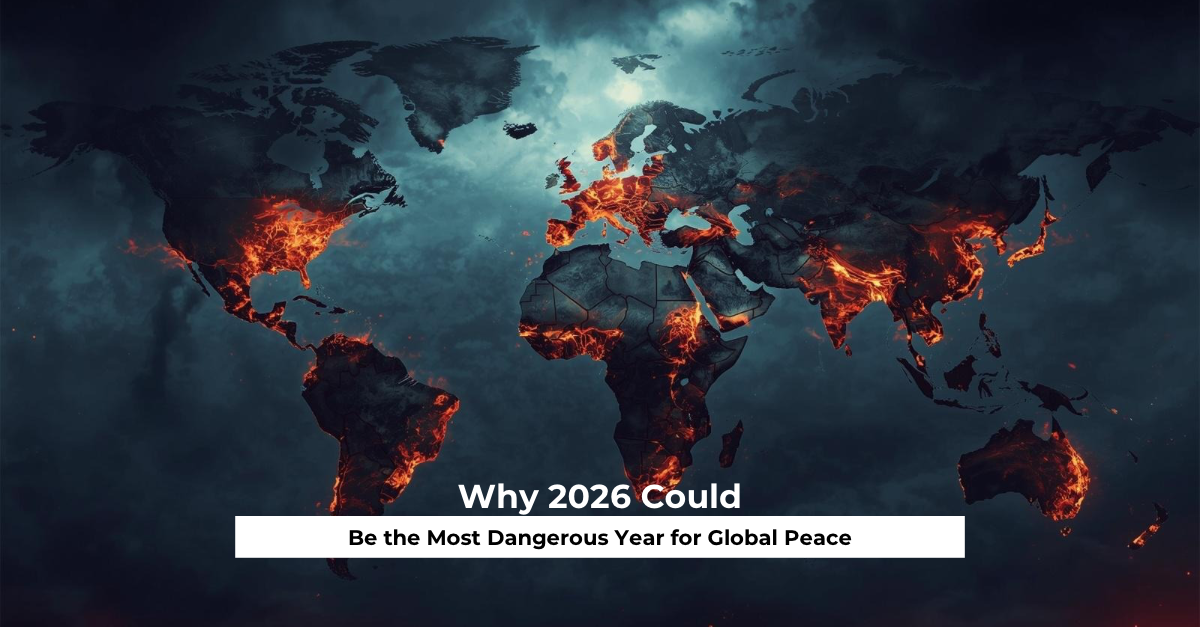
Why 2026 Could Be the Most Dangerous Year for Global Peace
Hey there, friend – imagine scrolling through your feed and suddenly realizing the world feels like a pressure cooker about to blow. That’s kind of where we’re at heading into 2026. It’s not just one big bad event; it’s a bunch of little fires that could merge into a massive inferno. Why this year specifically? Well, let’s chat about it like we’re grabbing coffee, because honestly, understanding this stuff could help us all sleep a bit better – or at least prepare smarter.
superpowers flexing muscles, old grudges resurfacing, and new tech throwing curveballs no one’s ready for. 2026 isn’t some random pick; it’s when a bunch of simmering issues hit boiling point. From economic hiccups to climate curveballs, it’s like the universe decided to test humanity’s chill factor all at once. But don’t worry, I’ll break it down step by step, keeping it real and straightforward, so you can see the big picture without getting overwhelmed.
A World Teetering on the Edge – Understanding the Perfect Storm
Ever feel like life’s throwing too many curveballs at once? That’s global peace in 2026 – a perfect storm of politics, economics, and Mother Nature’s mood swings. It’s not doom and gloom for kicks; it’s about spotting patterns so we can maybe steer clear of the worst.
What Historical Patterns Tell Us About Rising Tensions
Think back to those history classes – remember how the 1930s felt eerily like a buildup to something massive? Economic crashes, rising nationalism, tech changing warfare. Fast-forward to now, and 2026 echoes that vibe but with steroids. We’ve got more interconnected economies, meaning one country’s sneeze could give the world a cold. Wars aren’t just armies clashing anymore; they’re sneaky cyber stuff and economic squeezes. Historically, when big powers get antsy about losing ground – like empires crumbling – things get dicey. Right now, shifts in power from West to East, plus internal dramas in key nations, are ringing those alarm bells loud.
Take the post-Cold War era; we thought peace was locked in, right? But nope, unresolved beefs like in the Middle East or Eastern Europe just festered. By 2026, these are exploding because delays in fixing them – think stalled talks or ignored warnings – have piled up. It’s like ignoring a leaky roof until the whole house floods. And with social media amplifying every grievance, small sparks turn into wildfires faster than ever. So, why 2026? It’s the year when timelines collide: election cycles wrap up, treaties expire, and tech milestones hit, forcing hands that might otherwise stay put.
Key Indicators Pointing to Heightened Risks in 2026
What if I told you experts are tracking signs like doctors monitoring a patient’s vitals? Rising military budgets worldwide – up 10% in recent years – scream preparation, not relaxation. Then there’s the uptick in proxy conflicts, where big players fight through smaller ones without direct hits, but the fallout’s just as messy. Economic inequality’s spiking too, fueling unrest from streets to borders.
Look at migration patterns; climate and war are pushing millions on the move, straining resources and sparking clashes. Cyber attacks are daily news now, eroding trust between nations. And don’t get me started on AI – it’s like giving kids matches in a hay barn. These indicators aren’t isolated; they’re linked, creating a feedback loop where one issue amps up another. In 2026, forecasts show these peaking: think resource shortages hitting critical levels or political transitions turning volatile. It’s not paranoia; it’s pattern recognition, and ignoring it would be like driving blindfolded on a cliff road.
Geopolitical Flashpoints That Could Ignite Anytime
Okay, let’s zoom in on the hot zones – places where a single misstep could cascade into something huge. These aren’t abstract; they’re real people, real stakes, and they’re keeping diplomats up at night.
The Endless Grind in Ukraine and Russia’s Shadow Games
You know that feeling when a argument drags on forever? That’s Ukraine in 2026 – a grinding stalemate that’s sucking in more than just two countries. Russia’s not backing down, pushing advances despite massive costs, while Ukraine’s holding but hurting from power outages and attrition.
How Hybrid Warfare is Redefining Battles
Hybrid warfare? It’s like fighting with smoke and mirrors – drones buzzing borders, cyber hacks crippling grids, and propaganda twisting truths. Russia’s mastering this, targeting NATO without full-on invasion. Imagine waking up to your country’s systems down; that’s the new normal. In 2026, expect more frequent clashes: NATO shooting down intruders, exercises right on Russia’s doorstep. It’s risky because everyone’s getting bolder, thinking the other won’t escalate. But what if they do? One downed plane, and boom – wider war.
The Human Cost and Why It Won’t Stop Soon
Behind the headlines? Families shattered, cities in ruins. Millions displaced, kids missing school – it’s heartbreaking. Why no end? Politics, pride, and power plays. External support keeps the fire going; cut that, and talks might stick. But in 2026, with shifting U.S. policies, Europe’s burdened, and Russia’s defiant, it’s like a bad breakup where neither side blinks first. The toll? Not just lives, but global food prices spiking from blocked grains, hitting the poorest hardest.
Middle East Powder Keg: From Gaza to Broader Escalations
The Middle East’s like a family reunion gone wrong – old feuds, new grudges, and everyone’s armed. 2026 could see it all flare up, from fragile truces to full-blown confrontations.
The Fragile Ceasefire in Gaza and Lingering Wounds
That ceasefire in Gaza? It’s paper-thin, with people crammed in dire conditions under divided control. Reconstruction’s stalled, wounds festering. Israel’s holding chunks, blocking aid – it’s a recipe for resentment. What happens when short-term fixes crumble? Renewed violence, that’s what. And with West Bank tensions – land grabs, clashes – it’s like dominoes waiting to fall. Palestinians dream of statehood, but reality’s harsh, fueling cycles of despair.
Iran’s Role and the Nuclear Tightrope
Iran’s the wildcard, rebuilding after strikes but shadowy on nukes. No talks mean suspicions skyrocket. Houthis in Yemen keep disrupting shipping, despite hits. It’s a tightrope: one wrong move, and Israel or the U.S. strikes again. Why dangerous? Nuclear escalation’s nightmare fuel – think mutually assured destruction, but with more players. In 2026, without inspections or deals, it’s like playing chicken with atomic bombs.
US-China Standoff: Taiwan as the Ultimate Test
Ever watched two alphas circle each other? That’s U.S. and China over Taiwan. Beijing’s ramping up pressure – military drills, economic squeezes – while the U.S. vows defense. 2026 could be the flashpoint if miscalculations happen, like a blockade or accidental clash. Why now? Tech races heating up, with China dominating EVs and AI, making them bolder. A war here? It’d disrupt global supply chains, like your phone suddenly costing triple. But it’s more than gadgets; it’s about who calls shots in Asia, and the stakes are sky-high.
Superpower Shenanigans – How Big Players Are Stirring the Pot
Big countries aren’t just bystanders; they’re often the chefs turning up the heat. Let’s talk about how their internal messes and ambitions are messing with everyone else.
America’s Internal Chaos Spilling Over Globally
America’s like that friend in a midlife crisis – unpredictable, and it affects us all. Political divisions deep, with attempts to reshape government echoing revolutions.
Political Shifts and Their Ripple Effects Abroad
New policies under bold leadership? They’re shaking alliances. Think pulling back from old commitments, focusing on home turf. In Latin America, interventions in Venezuela aim at regime change, but it’s tricky – ousting one leader doesn’t guarantee stability. Ripples? Refugees, drug flows, regional backlash. Globally, it’s making partners nervous, like Europe scrambling to fill security gaps. What if this inward turn leaves vacuums for others to fill? Chaos, that’s what.
China’s Economic Squeeze and Tech Dominance Push
China’s got the tech edge – EVs, drones, you name it – but deflation’s biting hard. Prioritizing control over fixes means pain for the young, eroding dreams. They’re exporting cheap goods, flooding markets, but trading partners won’t take it forever. It’s like a giant squeezing a balloon; pressure builds elsewhere. In 2026, this could spark trade wars, amplifying tensions in Asia and beyond.
Russia’s Relentless Push for Influence
Russia’s not quitting; they’re pivoting to hybrid tactics, eroding support for foes. From Europe to Africa, they’re offering mercs and deals where West hesitates. It’s smart but dangerous – more confrontations, less trust. Why persistent? Survival mode after sanctions. In 2026, expect bolder moves, like meddling in elections or cyber ops, keeping the world on edge.
Hidden Dangers Lurking Beyond Borders
Not all threats wear uniforms; some sneak in through back doors, like climate or tech gone wild.
Climate Chaos Fueling Resource Battles
Mother Nature’s throwing tantrums, and we’re paying. Droughts, floods – they’re not just weather; they’re conflict starters, displacing millions, straining borders.
Water Wars: The New Frontline of Conflict
Water’s the new oil, but scarcer. Half the world stressed, no global rules. In 2026, treaties snap: Indus suspended, Nile dams without deals, China damming upstream. Nuclear rivals in South Asia weaponizing rivers? Terrifying. Extremists exploit scarcity in Africa, turning taps into terror tools. It’s like fighting over the last slice of pizza, but with lives at stake.
The Cyber and AI Wild West
Cyber’s the invisible battlefield – hacks stealing data, shutting grids. AI? It’s eating its way in, embedding ads, shaping thoughts. Companies chasing profits without brakes could erode society, making us dumber, more divided. In 2026, expect AI-fueled misinformation spiking elections, or cyber wars paralyzing economies. It’s like giving superpowers to pranksters; fun until it’s not.
Nuclear Nightmares in a Multiplying World
Nukes spreading – Iran’s close, others tempted. With tensions high, misreads could trigger use. Think false alarms in a panic. 2026’s volatile; one escalation, and we’re talking doomsday clocks ticking louder.
Regional Hotbeds Ready to Boil Over
Zoom out to regions; each has its own brew of trouble, but they connect globally.
Africa’s Unraveling: Sudan, Ethiopia, and the Sahel Saga
Sudan’s civil war’s brutal – armies vs. militias, famine raging. RSF atrocities, foreign arms fueling. Ethiopia-Eritrea teetering on war over access, rebels armed. Sahel’s jihadists blockading cities, regimes wobbling. In 2026, collapses could spill borders, drawing in more players like UAE or Russia.
Asia’s Volatile Mix: Myanmar to Afghanistan-Pakistan Tensions
Myanmar’s junta clinging with sham votes, rebels fighting back. Rohingya suffer more. Afghanistan-Pakistan: border clashes over militants, strikes resuming. It’s like neighbors feuding with guns; small sparks, big booms.
Latin America’s Brewing Storms: Venezuela and Neighbors
Venezuela’s the hotspot – U.S. eyeing intervention, framing as anti-drugs. Risks chaos if Maduro falls without plan. Echoes in Haiti, Ecuador; instability breeds cartels, migrations.
Economic Turbulence as a Silent Instigator
Money talks, and right now, it’s whispering warnings. Economic woes aren’t flashy, but they underpin unrest.
Trade Wars and the Zombie Deals Dragging Us Down
Trade pacts like USMCA in limbo – not dead, not alive, keeping businesses guessing. Tariffs, concessions squeezed bilaterally. In 2026, this uncertainty amps protectionism, hitting global growth.
Deflation Traps and How They Spark Unrest
China’s spiral: no stimulus, pain builds. Exporting deflation pressures others. Job losses, youth frustration – it’s fuel for protests, migrations, even alliances shifting.
Glimmers of Hope – Paths to Dodging the Bullet
Alright, enough gloom – is there light? Yeah, if we play smart.
Diplomatic Plays That Could Turn the Tide
Shuttle talks, ceasefires – they’ve worked before. In Ukraine, neutral zones; Middle East, inspections. U.S. influence, if used wisely, could broker deals in Sudan, Syria.
Why International Teamwork Matters More Than Ever
UN, EU, African Union – they’re flawed but essential. Pooling resources for aid, monitoring. In 2026, strengthening them could prevent escalations, like water treaties or AI regs.
In wrapping this up, 2026 stands out as a year where interconnected risks could unravel global peace like a pulled thread in a sweater. From superpower rivalries to hidden threats like water scarcity and AI overreach, the dangers are real and multifaceted. But remember, awareness is the first step – by understanding these dynamics, we can push for better policies, support diplomacy, and foster empathy across borders. It’s not inevitable doom; it’s a call to action for all of us to advocate for a more stable world. Let’s hope leaders listen before it’s too late.
Frequently Asked Questions
1. What specific event in 2026 might trigger a major global conflict? While no single event is guaranteed, escalations in Ukraine’s hybrid warfare or a miscalculation over Taiwan could quickly spiral, drawing in multiple nations due to alliances and economic ties.
2. How does climate change directly threaten peace in 2026? Beyond extreme weather, it’s amplifying resource shortages, like water disputes in South Asia or Africa, where scarcity leads to migrations, border clashes, and exploitation by extremists.
3. Could AI really destabilize the world this year? Absolutely – with companies pushing extractive models without regulations, AI could manipulate information, erode trust, and even automate cyber attacks, making societies more vulnerable to division.
4. Why is Latin America a rising concern for global stability? Interventions in places like Venezuela risk creating power vacuums, boosting cartels and refugees, which could strain U.S. resources and inspire copycat actions elsewhere.
5. Is there any positive trend that might offset these risks? Yes, growing international coalitions for diplomacy, like in Africa or the Middle East, show potential for de-escalation if major powers commit to multilateral talks over unilateral moves.