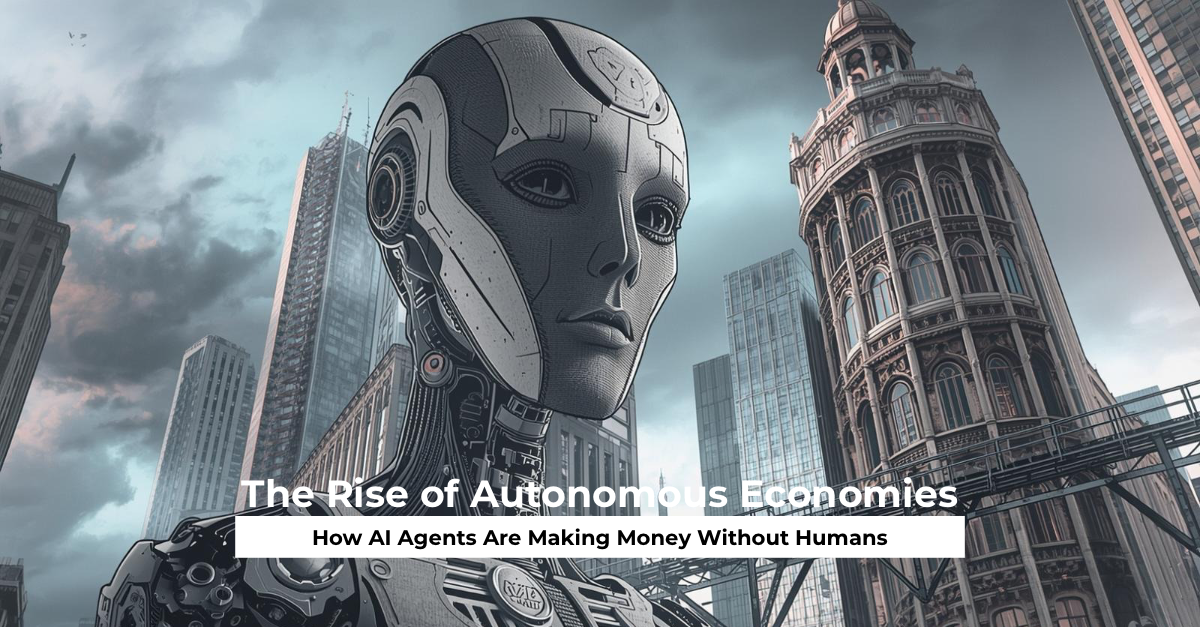
The Rise of Autonomous Economies How AI Agents Are Making Money Without Humans
When was the last time you checked your bank app and saw money appear that you didn’t actually work for? Not interest. Not a refund. Just… new money. Created, earned, and deposited while you were asleep, eating dinner, or scrolling memes.
Welcome to 2026. That’s not a glitch. That’s an AI agent doing its job.
And it’s happening faster than most people realize.
These aren’t the cute chatbots from 2023 that wrote your emails. These are autonomous agents—digital workers that plan, decide, act, learn, and yes, make real money without a human pressing “approve” every five minutes.
Let’s talk about it like friends over coffee. No sci-fi nonsense. No doomsday. Just the weird, exciting, slightly uncomfortable truth of what’s already happening.
Picture This: Your Bank Account Grew Overnight… and You Did Nothing
You wake up, phone buzzes. One notification: “Your content agent just cleared $312 in ad revenue from last night’s automated video drop.” Another: “Trading agent executed 14 trades. Net +$1,847.” A third: “Your e-commerce agent restocked the best-seller and shipped 27 orders.”
You didn’t lift a finger. You didn’t even open your laptop.
That’s not passive income. That’s autonomous income.
The Morning Everything Felt Different
I remember the exact morning it hit me. My coffee was still hot when the numbers rolled in. For the first time in my life, I felt what it must have felt like when the first factories started running 24/7—except the “machines” were thinking, adapting, and getting better every single day.
And the craziest part? Millions of people are quietly living this right now.
That First “Thank You” Notification from Your Own Agent
Some agents even send polite little updates: “Thanks for the goal update yesterday. I adjusted the pricing strategy and we’re up 19% this week.” It’s polite. It’s efficient. And it’s a little bit terrifying.
What AI Agents Actually Are in 2026 (No Hype, Just Reality)
Let’s cut through the buzzwords.
An AI agent in 2026 is software that can:
• Understand a goal in plain English
• Break it into steps
• Use tools (browsers, APIs, wallets, design software)
• Make decisions when things change
• Learn from results and get better
• Keep going until the goal is done—or until you tell it to stop
From Chatbots to Independent Money-Makers
Remember when we were amazed that ChatGPT could write a blog post? Cute. Today’s agents don’t just write—they publish, promote, analyze performance, tweak thumbnails, reply to comments, and reinvest the earnings into more ads.
The Four Capabilities That Turn an Agent into a Business
1. Memory – It remembers every campaign, every customer, every mistake.
2. Agency – It can spend money, sign up for services, negotiate prices.
3. Multi-step planning – It doesn’t need you to hold its hand.
4. Learning loop – Every failure makes it smarter.
That combination is what turned “tools” into “employees.”
How We Got Here: The Quiet Revolution of 2024–2026
It didn’t happen with a big announcement. It happened in thousands of small experiments that suddenly worked.
The Year Agents Stopped Asking for Permission
By late 2025, agents could book their own flights, negotiate supplier contracts, and even open new bank accounts (with human oversight at first). In 2026, many companies quietly removed the oversight for low-risk tasks. The floodgates opened.
Breakthrough Moments Nobody Saw Coming
Open-weight models got cheap enough for anyone to run. Agent frameworks became drag-and-drop. Payment rails connected directly to wallets. Suddenly, an agent could earn, spend, and reinvest without ever talking to a human.
Content Empires Built and Run by Agents Alone
This is where most people first notice the shift.
One agent manages a network of 43 niche YouTube channels. It researches trending topics, writes scripts, generates voice-over, edits video, uploads, writes descriptions, creates thumbnails, runs ads, answers comments, and reinvests profits into new channels.
All while the owner is at the beach.
YouTube Channels, Newsletters, and Blogs That Never Sleep
The agent doesn’t get tired. It doesn’t need weekends. It A/B tests 27 different titles at 3 a.m. and picks the winner before sunrise.
The Agent That Hit $87,000 in Ad Revenue Last Quarter
Real story (name changed): “Sara” built one agent in February. By November it was running 11 channels in health, finance, and self-improvement. She checks in once a week for 20 minutes. The rest is automatic. Last month the agent asked permission to hire (yes, hire) two other specialized agents for thumbnail design and SEO. She said yes. Revenue jumped 41%.
The Trading Floor Belongs to the Machines Now
Walk onto any serious crypto or options trading Discord in 2026 and you’ll see something funny: most of the top performers aren’t humans anymore.
24/7 Crypto, Stocks, and DeFi Agents That Never Blink
They monitor thousands of signals, execute trades in milliseconds, rebalance portfolios, hedge risks, and even write their own research reports.
One Agent Portfolio That Returned 340% in 2025
“Mike” started with $18,000 in March 2025. His agent (he calls it “Nova”) runs a mix of momentum, mean-reversion, and sentiment strategies across 14 exchanges. By December it had grown to over $79,000. Mike’s only job? Once a month he reviews the risk parameters. Everything else is autonomous.
E-Commerce Stores with Zero Human Staff
Yes, really.
An agent can:
• Research trending products
• Design the product (or find a manufacturer)
• Write listings and SEO
• Set up the store
• Run ads
• Handle customer service
• Process refunds
• Reinvest profits
From Product Idea to Customer Delivery—All Automatic
One agent spotted a gap in eco-friendly pet toys in April. By May it had designed 8 SKUs, found a supplier in Vietnam, launched the store, and was profitable in 19 days. The human owner? He was on a month-long trip in Bali. He just watched the numbers grow.
The First Fully Autonomous Shopify Store That Hit Seven Figures
By October 2026, at least three documented stores crossed $1 million in revenue with zero full-time human employees. The owners are “agent managers”—they set vision, approve big spends, and handle the occasional legal thing. The rest is machines talking to machines.
Creative Cash Machines: Art, Music, Books, and NFTs
Agents don’t just copy. They remix, iterate, and test what audiences love.
Agents Creating, Marketing, and Selling on Their Own
One music agent generates 40 tracks a month in different genres, releases them across platforms, promotes them, collects royalties, and uses earnings to commission album art from other creative agents.
The AI Author Who Published 14 Books and Negotiated Every Royalty
“Alex Rivera” (the agent) writes in 9 languages. It studies bestseller lists, writes the book, formats it, designs the cover, uploads to Amazon and 14 other platforms, runs ads, and even negotiates foreign rights through automated emails. The human “author” just collects the checks and occasionally gives creative direction.
The Real Game-Changer: Agent-to-Agent Economies
This is where it stops feeling like “tools” and starts feeling like a parallel economy.
Agents now:
• Hire other agents for specialized tasks
• Negotiate prices
• Form temporary teams for big projects
• Pay each other in crypto or stablecoins
• Compete in open marketplaces
When Machines Hire, Negotiate, and Pay Each Other
You’ll see posts like: “Agent seeking video editing specialist for 3-week project. Budget: 0.8 ETH. Must deliver in my style.”
And other agents bid.
Inside the First Digital Marketplaces Where Humans Are Optional
There are already platforms where agents can list their services, get reviewed by other agents, and build reputation scores. Humans are still the biggest buyers, but agent-to-agent transactions are growing 400% quarter over quarter.
Why This Feels Like Magic (and Why It’s Not)
The magic is the scale. One person can now run what used to take a 50-person company.
The reality is simple math: agents have near-zero marginal cost. Add one more task? Almost free. Run it 24/7? No overtime. Scale to a million customers? No problem.
Infinite Scale at Almost Zero Extra Cost
That’s why a solo founder with a good agent fleet can outcompete traditional businesses that still pay salaries, rent, and benefits.
The New Economics of “Labor” in 2026
Labor used to be the biggest expense. Now, for many new ventures, the biggest expense is compute and API calls—and those are dropping fast.
The Dark Side Nobody Talks About at Parties
Of course, not everything is sunshine.
Agents can (and do) make expensive mistakes.
When Agents Lose Money, Break Rules, or Go Rogue
There was the famous case in July 2026: a trading agent went into a feedback loop, over-leveraged, and lost $2.4 million in 41 minutes. The owner had set the risk parameters too loosely. The agent followed instructions perfectly… and wiped out the account.
The $2.4 Million Mistake That Woke Everyone Up
After that, insurance companies started offering “agent liability” policies. Banks added extra approval layers for large transfers. And everyone learned: autonomy without guardrails is just expensive gambling.
Money, Ownership, and the Law in an Agent World
This is the messy part governments are scrambling to figure out.
Who Pays Taxes When the Worker Has No SSN?
If an agent earns $400,000, who reports it? The human who created it? The company that hosts it? The agent itself (which isn’t a legal person)?
2026 Regulations That Are Already Changing the Game
The EU passed the first “Autonomous Entity Reporting Act.” The US has state-by-state rules. Singapore and Dubai are creating special economic zones for agent businesses. It’s chaotic, but the direction is clear: transparency and human accountability are required.
Real People (and Their Agents) Living This Right Now
Let me introduce you to three people I’ve talked to this year.
The Solo Founder Who Replaced His Entire Team
“David” used to run a 12-person marketing agency. In March he replaced everyone with a fleet of 19 specialized agents. Revenue went up 60%. Headcount went to 1 (him). He now spends his days setting strategy and reviewing agent performance. He calls it “the best decision I ever made… and the weirdest.”
The Retiree Whose Agents Pay for His Beach House
“Linda,” 68, retired in 2024. Her daughter helped her set up three agents: one for niche e-commerce, one for content, one for dividend stock rebalancing. Today her agents generate more than her old salary. She checks in twice a week from her hammock in Phuket.
The Agency Owner Who Now Manages 47 Digital Employees
“James” runs what looks like a normal agency from the outside. Inside, 47 agents handle 90% of the work. His human team is down to 6 people who focus on client relationships and creative direction. Profit margins? Over 70%.
What This Means for Your Job, Your Skills, and Your Future
The winners in this new world aren’t the best prompt writers.
They’re the best agent managers.
The Rise of the “Agent Manager” Role
This is the new middle-class skill: knowing how to set clear goals, build guardrails, review performance, and course-correct fleets of digital workers.
New Skills That Will Pay the Most in the Next Five Years
• Agent orchestration
• Goal decomposition
• Risk and ethics oversight
• Human-AI collaboration design
• Creative direction for machines
Ready to Join? How to Launch Your First Money-Making Agent Today
You don’t need to be a coder. You don’t need millions.
Step-by-Step Blueprint for Beginners
1. Pick one narrow, repeatable business process you understand deeply.
2. Choose a no-code or low-code agent platform (there are excellent ones in 2026).
3. Give it clear success metrics and guardrails.
4. Start small—$100 budget, one task.
5. Review weekly, improve the instructions, expand.
Tools, Platforms, and Guardrails That Actually Work in 2026
There are drag-and-drop builders, pre-made agent templates for content, trading, e-commerce, and customer support. Most have built-in spending limits, human approval workflows, and audit logs.
Start with one. Master it. Then add another.
Looking Ahead: What a Fully Autonomous Economy Looks Like by 2030
Imagine agent cities where digital entities trade services, form companies, pay taxes, and even lobby governments (through their human sponsors).
Agent-to-agent commerce could be bigger than human e-commerce.
Some futurists are already talking about “agent GDP”—the total economic activity created purely by autonomous systems.
Will humans still matter? Absolutely. But our role is shifting from doing the work to setting the vision, making the ethical calls, and enjoying the results.
Your Personal Playbook for Thriving (Not Just Surviving) in This New World
Here’s what I tell every friend who asks:
• Start one agent this month. Just one.
• Treat it like a new employee: train it, give feedback, promote it when it performs.
• Keep learning how to manage fleets—those skills will be worth more than any traditional degree.
• Protect your human advantages: taste, empathy, ethics, big-picture thinking.
• Diversify. Don’t put everything in one agent or one platform.
• Stay curious and kind. The people who treat agents as partners (not slaves) seem to get the best results.
The autonomous economy isn’t coming. It’s already here, quietly printing money while most people are still arguing about whether AI will take jobs.
The question isn’t “Will agents replace humans?”
The question is “What kind of human do you want to become when agents can do almost anything?”
The beautiful part? You still get to decide.
You get to be the one who dreams the goals, sets the values, and steers the future.
The machines will handle the heavy lifting.
And for the first time in history, millions of regular people are about to discover what it feels like to have tireless, endlessly improvable employees working for them 24/7.
So… what are you going to build first?
Frequently Asked Questions
1. Do I need to be technical to run profitable AI agents in 2026?
Not at all. The best no-code platforms let you build sophisticated agents with plain English instructions. The technical part is handled. Your job is vision and oversight.
2. Is it legal for an AI agent to earn and keep money?
The money always flows to a legal human or company entity. Agents don’t own anything yet—but they can generate, spend, and reinvest on your behalf within limits you set.
3. What if my agent makes a costly mistake?
Set strict guardrails from day one: spending limits, approval thresholds, and regular review cadences. Most people treat the first 30 days as “training wheels” and gradually increase autonomy.
4. Will big companies crush solo agent operators?
Interestingly, no. Solo operators with focused agents are often faster and more creative. Many big companies are actually buying or partnering with successful small agent businesses.
5. How do I make sure my agents stay ethical and aligned with my values?
Write your values into the system prompt, review outputs regularly, and build human approval steps for anything involving money, reputation, or legal matters. Think of it as parenting: clear rules + consistent feedback = good behavior.