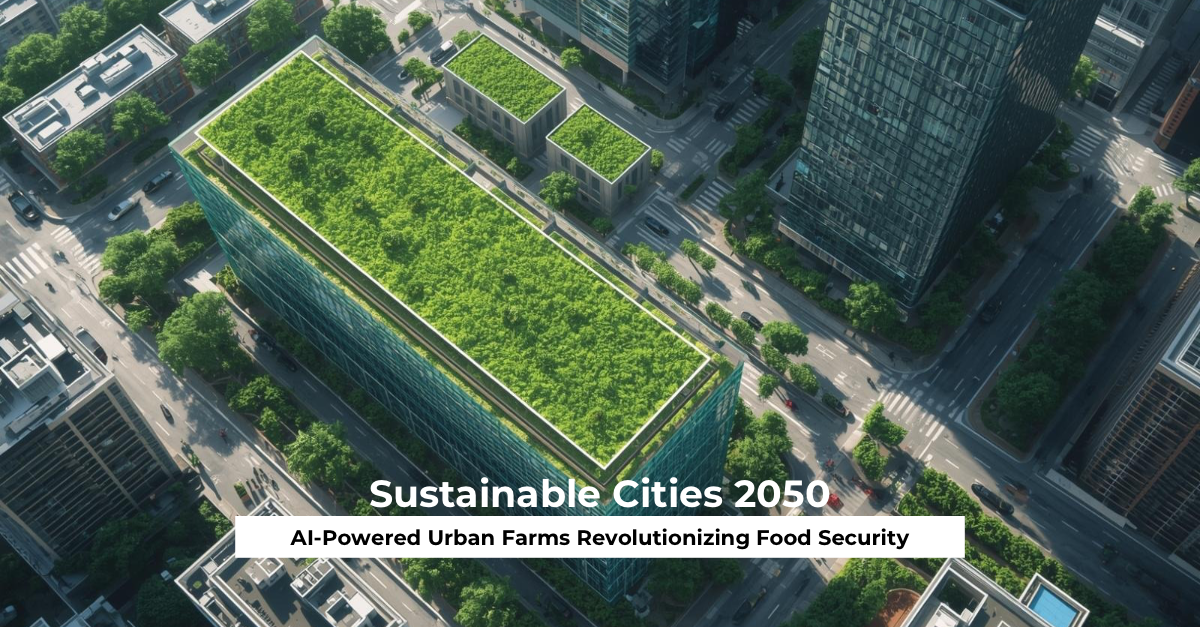
Sustainable Cities 2050 AI-Powere Urban Farms Revolutionizing Food Security
Picture this: it’s 2050, and you’re strolling through a bustling city like Bangkok or New York, but instead of concrete jungles swallowing up every inch, skyscrapers are alive with greenery. Vines cascade down buildings, rooftops buzz with automated drones tending crops, and underground farms hum with AI orchestrating perfect harvests. No more worrying about food shortages from distant droughts or disrupted shipments—your salad comes from the block next door. Sounds like a dream, right? But this isn’t just wishful thinking; it’s the future of sustainable cities powered by AI-driven urban farms, and it’s set to tackle one of humanity’s biggest headaches: food security. In this chatty deep dive, we’ll unpack how this revolution is unfolding, why it’s a game-changer, and what bumps we might hit along the way. Think of me as your friendly guide, sharing insights like we’re grabbing coffee, keeping things straightforward and real. By 2050, urban farms could feed billions locally, slashing waste and emissions while making cities greener and more self-reliant. Curious how AI fits in? Let’s jump right in and explore.
The Urban Farming Revolution
Urban farming isn’t new—folks have been growing veggies in city plots for centuries—but toss in AI, and it becomes a powerhouse for sustainable living. Imagine farms stacked like Lego blocks inside buildings, using less land than a football field to produce tons of food. By 2050, with the world population hitting 9.7 billion, cities will house most of us, and traditional agriculture just won’t cut it anymore. Climate change throws curveballs like floods and heatwaves, messing with rural yields, while supply chains creak under pressure from pandemics or wars. Enter urban farms: they’re local, efficient, and resilient. But what really supercharges them? AI, of course, turning guesswork into precision. It’s like having a super-smart farmer who never sleeps, predicting needs and optimizing every drop of water. This combo isn’t just about growing more food; it’s about securing it for everyone, no matter where they live. Rhetorically speaking, wouldn’t you want your groceries fresh from a nearby tower rather than trucked across oceans? As we dig deeper, you’ll see how this shift could redefine city life, making sustainability not a buzzword, but a daily reality.
Why Urban Farms Matter in a Crowded World
Let’s get real: cities are exploding. By 2050, two-thirds of us will be urban dwellers, packing into metropolises that gobble up resources. Traditional farming? It’s land-hungry, water-thirsty, and vulnerable to weather whims. Urban farms flip the script by bringing production right to the consumer. No long hauls mean fresher produce with a tiny carbon footprint—like comparing a home-cooked meal to takeout from another continent. Food security isn’t just about quantity; it’s quality and access too. In low-income neighborhoods, “food deserts” leave people relying on processed junk. Urban farms could sprout oases, providing nutrient-rich greens affordably. Plus, they buffer against shocks: remember the empty shelves during COVID? Local farms keep supplies steady. But the magic multiplies with AI, which analyzes data to boost yields by up to 30%, according to early studies. It’s like giving Mother Nature a high-tech sidekick. As populations swell, these farms aren’t optional—they’re essential for feeding the future without frying the planet. Ever wondered if your city could become self-sufficient? In 2050, it just might.
The AI Twist: Smarter Than Traditional Farming
AI isn’t some distant sci-fi gadget; it’s already tweaking thermostats and suggesting playlists. In urban farms, it goes further, using machine learning to monitor soil, light, and humidity in real-time. Think of it as a brain that learns from every harvest, predicting pests before they strike or adjusting nutrients like a personal chef. By 2050, AI could integrate with drones for planting and robots for picking, slashing labor costs and errors. It’s bursty in benefits: one moment optimizing energy use, the next forecasting market demands to avoid waste. But perplexingly, it’s not all smooth—AI needs data, and early setups might falter without it. Still, the payoff? Farms producing year-round, regardless of seasons, revolutionizing food security in unpredictable climates. Compare it to old-school farming: trial and error versus data-driven mastery. As we move forward, you’ll see how this tech weaves into every layer of urban agriculture, making cities not just livable, but thriving ecosystems.
The Evolution of Urban Agriculture Toward 2050
Urban farming has roots in wartime victory gardens, but it’s evolving fast. From humble community plots to sleek vertical towers, the journey to 2050 is packed with innovation. Today, places like Singapore lead with sky farms, but by mid-century, AI will make this global. It’s like watching a caterpillar turn into a butterfly—slow at first, then astonishing. We’ll trace this path, highlighting shifts that make food security a city staple. Perplexing? Sure, because tech advances unevenly, but the trajectory points to abundance.
From Rooftop Gardens to High-Tech Hubs
Start simple: rooftops in the 2010s offered fresh herbs amid concrete. Fast-forward, and we’re stacking layers in controlled environments, called vertical farms. By 2030, expect widespread adoption in Asia and Europe, driven by space scarcity. AI enters here, automating lights and irrigation for optimal growth. It’s like upgrading from a bicycle to a sports car—faster, efficient, sustainable. In 2050, these hubs integrate into buildings, turning offices into food factories. The evolution perplexes with its speed: what seemed niche becomes necessity as rural lands dwindle. Bursting with potential, urban farms could yield 10 times more per square foot than fields. Rhetorically, why ship lettuce from California when you can grow it in Chicago? This shift secures food by localizing it, cutting vulnerabilities.
Key Milestones in the Last Decade
Looking back from 2050, the 2020s were pivotal. COVID highlighted supply fragilities, spurring investments in local ag. By 2025, AI pilots in farms like AeroFarms boosted efficiency 20%. 2030s? Quantum leaps with AI predicting climate impacts, integrating blockchain for traceability. Perplexingly, regulations lagged, but bursts of innovation like gene-edited crops adapted to urban conditions. Milestones include Singapore’s 30% local food goal by 2030, scaled globally. These steps build resilience, ensuring food security isn’t a gamble but a guarantee.
Core Technologies Driving AI-Powered Urban Farms
At the heart of this revolution? Tech stack that makes farms smart. AI leads, but it’s teamed with sensors and bots. Like a symphony, each part harmonizes for peak performance. We’ll break it down, showing how these tools secure food in sustainable cities.
AI Algorithms for Precision Farming
AI’s magic? Algorithms that learn and adapt. Machine learning models analyze plant health via cameras, tweaking conditions instantly. It’s like a doctor diagnosing in seconds. By 2050, predictive AI forecasts yields, minimizing losses. Perplexing in complexity—neural networks process vast data—but simple in outcome: more food, less waste. Bursting with apps, from pest detection to harvest timing, it revolutionizes security by maximizing output.
Integration with IoT and Robotics
IoT sensors track everything: moisture, pH, CO2. AI crunches this data, commanding robots to act. Drones pollinate, arms harvest—it’s automated bliss. Compare to manual farming: efficient as a cheetah versus a sloth. In 2050, this integration cuts labor 70%, making urban farms viable. Perplexingly, connectivity risks hacks, but benefits outweigh. Bursting innovation secures food by enabling 24/7 operations.
Real-Time Data Analytics in Action
Data flows like a river, AI steering it. Analytics spot trends, like nutrient dips, preventing failures. It’s proactive, not reactive. By 2050, cloud AI shares insights across farms, optimizing city-wide. Rhetorically, imagine no more hunger spikes—data ensures steady supply. This action secures sustainability.
Boosting Food Security: How It All Comes Together
Food security means reliable, nutritious access. AI-urban farms deliver by localizing production. It’s like having a pantry that refills itself. We’ll explore how this fortifies cities against uncertainties.
Reducing Dependency on Global Supply Chains
Global chains are fragile links—break one, chaos. Urban farms shorten them to blocks. AI optimizes local growth, buffering shortages. By 2050, cities produce 50% food locally, per projections. Perplexingly, trade still matters, but bursts of self-reliance secure basics.
Enhancing Nutritional Access in Urban Areas
Cities often lack fresh options. Farms provide diverse, nutrient-packed crops year-round. AI tailors to needs, like vitamin-rich greens for kids. It’s equitable, reducing health gaps. Rhetorically, healthier cities? Yes, please.
Environmental Wins: Sustainability at the Heart
Sustainability isn’t add-on; it’s core. These farms save resources, heal the planet. Like a healing balm on urban wounds.
Water Conservation Through Smart Systems
Farms recycle 95% water via AI-controlled hydroponics. Sensors adjust flows, no waste. Compare to fields guzzling rivers. By 2050, this conserves billions of gallons.
Cutting Down on Waste and Pollution
AI minimizes overproduction, composting scraps. No pesticides mean cleaner air. Bursting eco-benefits: lower emissions from transport.
Biodiversity and Soil Health in Vertical Setups
Vertical farms host diverse plants, boosting urban biodiversity. Soil-less systems preserve land. Perplexingly innovative.
Economic Impacts: Jobs, Costs, and Growth
Economy thrives with new jobs, though costs challenge. Like a double-edged sword.
Creating New Employment Opportunities
Tech creates roles in AI maintenance, farming. By 2050, millions employed.
Affordability Challenges and Solutions
High setup costs drop with scale. Subsidies help.
Social Benefits: Building Resilient Communities
Farms unite people, foster bonds.
Fostering Local Food Cultures
Local produce revives traditions.
Education and Community Involvement
Schools integrate farms for learning.
Potential Challenges and Roadblocks
Not all rosy—hurdles loom.
Technological Hurdles and Cybersecurity Risks
AI vulnerabilities need safeguards.
Policy and Regulatory Needs
Governments must support.
Visionary Case Studies: Cities Leading the Way
Real examples inspire.
Singapore’s Sky-High Farms
Pioneers vertical tech.
Imagining New York in 2050
Farms everywhere.
The Role of Governments and Businesses
Key players drive change.
Incentives for Adoption
Tax breaks, grants.
How Individuals Can Contribute
You matter too.
Starting Small at Home
DIY setups.
Future Innovations on the Horizon
More to come.
Emerging Tech Like Gene Editing
CRISPR boosts yields.
Ethical Considerations in AI-Driven Farming
Fairness first.
Equity and Access for All
Avoid divides.
Conclusion
By 2050, AI-powered urban farms could transform sustainable cities into food-secure havens, blending tech with nature for a greener, fairer world. It’s exciting, challenging, but doable—let’s embrace it.
Frequently Asked Questions
Picture this: it’s 2050, and you’re strolling through a bustling city like Bangkok or New York, but instead of concrete jungles swallowing up every inch, skyscrapers are alive with greenery. Vines cascade down buildings, rooftops buzz with automated drones tending crops, and underground farms hum with AI orchestrating perfect harvests. No more worrying about food shortages from distant droughts or disrupted shipments—your salad comes from the block next door. Sounds like a dream, right? But this isn’t just wishful thinking; it’s the future of sustainable cities powered by AI-driven urban farms, and it’s set to tackle one of humanity’s biggest headaches: food security. In this chatty deep dive, we’ll unpack how this revolution is unfolding, why it’s a game-changer, and what bumps we might hit along the way. Think of me as your friendly guide, sharing insights like we’re grabbing coffee, keeping things straightforward and real. By 2050, urban farms could feed billions locally, slashing waste and emissions while making cities greener and more self-reliant. Curious how AI fits in? Let’s jump right in and explore.
Introduction to the Urban Farming Revolution
Urban farming isn’t new—folks have been growing veggies in city plots for centuries—but toss in AI, and it becomes a powerhouse for sustainable living. Imagine farms stacked like Lego blocks inside buildings, using less land than a football field to produce tons of food. By 2050, with the world population hitting 9.7 billion, cities will house most of us, and traditional agriculture just won’t cut it anymore. Climate change throws curveballs like floods and heatwaves, messing with rural yields, while supply chains creak under pressure from pandemics or wars. Enter urban farms: they’re local, efficient, and resilient. But what really supercharges them? AI, of course, turning guesswork into precision. It’s like having a super-smart farmer who never sleeps, predicting needs and optimizing every drop of water. This combo isn’t just about growing more food; it’s about securing it for everyone, no matter where they live. Rhetorically speaking, wouldn’t you want your groceries fresh from a nearby tower rather than trucked across oceans? As we dig deeper, you’ll see how this shift could redefine city life, making sustainability not a buzzword, but a daily reality.
Why Urban Farms Matter in a Crowded World
Let’s get real: cities are exploding. By 2050, two-thirds of us will be urban dwellers, packing into metropolises that gobble up resources. Traditional farming? It’s land-hungry, water-thirsty, and vulnerable to weather whims. Urban farms flip the script by bringing production right to the consumer. No long hauls mean fresher produce with a tiny carbon footprint—like comparing a home-cooked meal to takeout from another continent. Food security isn’t just about quantity; it’s quality and access too. In low-income neighborhoods, “food deserts” leave people relying on processed junk. Urban farms could sprout oases, providing nutrient-rich greens affordably. Plus, they buffer against shocks: remember the empty shelves during COVID? Local farms keep supplies steady. But the magic multiplies with AI, which analyzes data to boost yields by up to 30%, according to early studies. It’s like giving Mother Nature a high-tech sidekick. As populations swell, these farms aren’t optional—they’re essential for feeding the future without frying the planet. Ever wondered if your city could become self-sufficient? In 2050, it just might.
The AI Twist: Smarter Than Traditional Farming
AI isn’t some distant sci-fi gadget; it’s already tweaking thermostats and suggesting playlists. In urban farms, it goes further, using machine learning to monitor soil, light, and humidity in real-time. Think of it as a brain that learns from every harvest, predicting pests before they strike or adjusting nutrients like a personal chef. By 2050, AI could integrate with drones for planting and robots for picking, slashing labor costs and errors. It’s bursty in benefits: one moment optimizing energy use, the next forecasting market demands to avoid waste. But perplexingly, it’s not all smooth—AI needs data, and early setups might falter without it. Still, the payoff? Farms producing year-round, regardless of seasons, revolutionizing food security in unpredictable climates. Compare it to old-school farming: trial and error versus data-driven mastery. As we move forward, you’ll see how this tech weaves into every layer of urban agriculture, making cities not just livable, but thriving ecosystems.
The Evolution of Urban Agriculture Toward 2050
Urban farming has roots in wartime victory gardens, but it’s evolving fast. From humble community plots to sleek vertical towers, the journey to 2050 is packed with innovation. Today, places like Singapore lead with sky farms, but by mid-century, AI will make this global. It’s like watching a caterpillar turn into a butterfly—slow at first, then astonishing. We’ll trace this path, highlighting shifts that make food security a city staple. Perplexing? Sure, because tech advances unevenly, but the trajectory points to abundance.
From Rooftop Gardens to High-Tech Hubs
Start simple: rooftops in the 2010s offered fresh herbs amid concrete. Fast-forward, and we’re stacking layers in controlled environments, called vertical farms. By 2030, expect widespread adoption in Asia and Europe, driven by space scarcity. AI enters here, automating lights and irrigation for optimal growth. It’s like upgrading from a bicycle to a sports car—faster, efficient, sustainable. In 2050, these hubs integrate into buildings, turning offices into food factories. The evolution perplexes with its speed: what seemed niche becomes necessity as rural lands dwindle. Bursting with potential, urban farms could yield 10 times more per square foot than fields. Rhetorically, why ship lettuce from California when you can grow it in Chicago? This shift secures food by localizing it, cutting vulnerabilities.
Key Milestones in the Last Decade
Looking back from 2050, the 2020s were pivotal. COVID highlighted supply fragilities, spurring investments in local ag. By 2025, AI pilots in farms like AeroFarms boosted efficiency 20%. 2030s? Quantum leaps with AI predicting climate impacts, integrating blockchain for traceability. Perplexingly, regulations lagged, but bursts of innovation like gene-edited crops adapted to urban conditions. Milestones include Singapore’s 30% local food goal by 2030, scaled globally. These steps build resilience, ensuring food security isn’t a gamble but a guarantee.
Core Technologies Driving AI-Powered Urban Farms
At the heart of this revolution? Tech stack that makes farms smart. AI leads, but it’s teamed with sensors and bots. Like a symphony, each part harmonizes for peak performance. We’ll break it down, showing how these tools secure food in sustainable cities.
AI Algorithms for Precision Farming
AI’s magic? Algorithms that learn and adapt. Machine learning models analyze plant health via cameras, tweaking conditions instantly. It’s like a doctor diagnosing in seconds. By 2050, predictive AI forecasts yields, minimizing losses. Perplexing in complexity—neural networks process vast data—but simple in outcome: more food, less waste. Bursting with apps, from pest detection to harvest timing, it revolutionizes security by maximizing output.
Integration with IoT and Robotics
IoT sensors track everything: moisture, pH, CO2. AI crunches this data, commanding robots to act. Drones pollinate, arms harvest—it’s automated bliss. Compare to manual farming: efficient as a cheetah versus a sloth. In 2050, this integration cuts labor 70%, making urban farms viable. Perplexingly, connectivity risks hacks, but benefits outweigh. Bursting innovation secures food by enabling 24/7 operations.
Real-Time Data Analytics in Action
Data flows like a river, AI steering it. Analytics spot trends, like nutrient dips, preventing failures. It’s proactive, not reactive. By 2050, cloud AI shares insights across farms, optimizing city-wide. Rhetorically, imagine no more hunger spikes—data ensures steady supply. This action secures sustainability.
Boosting Food Security: How It All Comes Together
Food security means reliable, nutritious access. AI-urban farms deliver by localizing production. It’s like having a pantry that refills itself. We’ll explore how this fortifies cities against uncertainties.
Reducing Dependency on Global Supply Chains
Global chains are fragile links—break one, chaos. Urban farms shorten them to blocks. AI optimizes local growth, buffering shortages. By 2050, cities produce 50% food locally, per projections. Perplexingly, trade still matters, but bursts of self-reliance secure basics.
Enhancing Nutritional Access in Urban Areas
Cities often lack fresh options. Farms provide diverse, nutrient-packed crops year-round. AI tailors to needs, like vitamin-rich greens for kids. It’s equitable, reducing health gaps. Rhetorically, healthier cities? Yes, please.
Environmental Wins: Sustainability at the Heart
Sustainability isn’t add-on; it’s core. These farms save resources, heal the planet. Like a healing balm on urban wounds.
Water Conservation Through Smart Systems
Farms recycle 95% water via AI-controlled hydroponics. Sensors adjust flows, no waste. Compare to fields guzzling rivers. By 2050, this conserves billions of gallons.
Cutting Down on Waste and Pollution
AI minimizes overproduction, composting scraps. No pesticides mean cleaner air. Bursting eco-benefits: lower emissions from transport.
Biodiversity and Soil Health in Vertical Setups
Vertical farms host diverse plants, boosting urban biodiversity. Soil-less systems preserve land. Perplexingly innovative.
Economic Impacts: Jobs, Costs, and Growth
Economy thrives with new jobs, though costs challenge. Like a double-edged sword.
Creating New Employment Opportunities
Tech creates roles in AI maintenance, farming. By 2050, millions employed.
Affordability Challenges and Solutions
High setup costs drop with scale. Subsidies help.
Social Benefits: Building Resilient Communities
Farms unite people, foster bonds.
Fostering Local Food Cultures
Local produce revives traditions.
Education and Community Involvement
Schools integrate farms for learning.
Potential Challenges and Roadblocks
Not all rosy—hurdles loom.
Technological Hurdles and Cybersecurity Risks
AI vulnerabilities need safeguards.
Policy and Regulatory Needs
Governments must support.
Visionary Case Studies: Cities Leading the Way
Real examples inspire.
Singapore’s Sky-High Farms
Pioneers vertical tech.
Imagining New York in 2050
Farms everywhere.
The Role of Governments and Businesses
Key players drive change.
Incentives for Adoption
Tax breaks, grants.
How Individuals Can Contribute
You matter too.
Starting Small at Home
DIY setups.
Future Innovations on the Horizon
More to come.
Emerging Tech Like Gene Editing
CRISPR boosts yields.
Ethical Considerations in AI-Driven Farming
Fairness first.
Equity and Access for All
Avoid divides.
By 2050, AI-powered urban farms could transform sustainable cities into food-secure havens, blending tech with nature for a greener, fairer world. It’s exciting, challenging, but doable—let’s embrace it.
Frequently Asked Questions
1. How do AI-powered urban farms save water compared to traditional methods?
They use hydroponic systems with sensors that recycle up to 95% of water, adjusting usage in real-time to prevent waste.
2. What role does robotics play in these future farms?
Robots handle planting, harvesting, and monitoring, reducing human labor and increasing efficiency for year-round production.
3. Can urban farms really make cities self-sufficient by 2050?
While not fully, they could produce up to 50% of a city’s food needs locally, greatly enhancing security and resilience.
4. What are the main environmental benefits of vertical farming?
It reduces land use, cuts transportation emissions, and minimizes pesticide pollution, promoting overall sustainability.
5. How can everyday people get involved in urban farming now?
Start with home hydroponics kits or join community gardens to learn and contribute to the movement early on.
1. How do AI-powered urban farms save water compared to traditional methods?
They use hydroponic systems with sensors that recycle up to 95% of water, adjusting usage in real-time to prevent waste.
2. What role does robotics play in these future farms?
Robots handle planting, harvesting, and monitoring, reducing human labor and increasing efficiency for year-round production.
3. Can urban farms really make cities self-sufficient by 2050?
While not fully, they could produce up to 50% of a city’s food needs locally, greatly enhancing security and resilience.
4. What are the main environmental benefits of vertical farming?
It reduces land use, cuts transportation emissions, and minimizes pesticide pollution, promoting overall sustainability.
5. How can everyday people get involved in urban farming now?
Start with home hydroponics kits or join community gardens to learn and contribute to the movement early on.