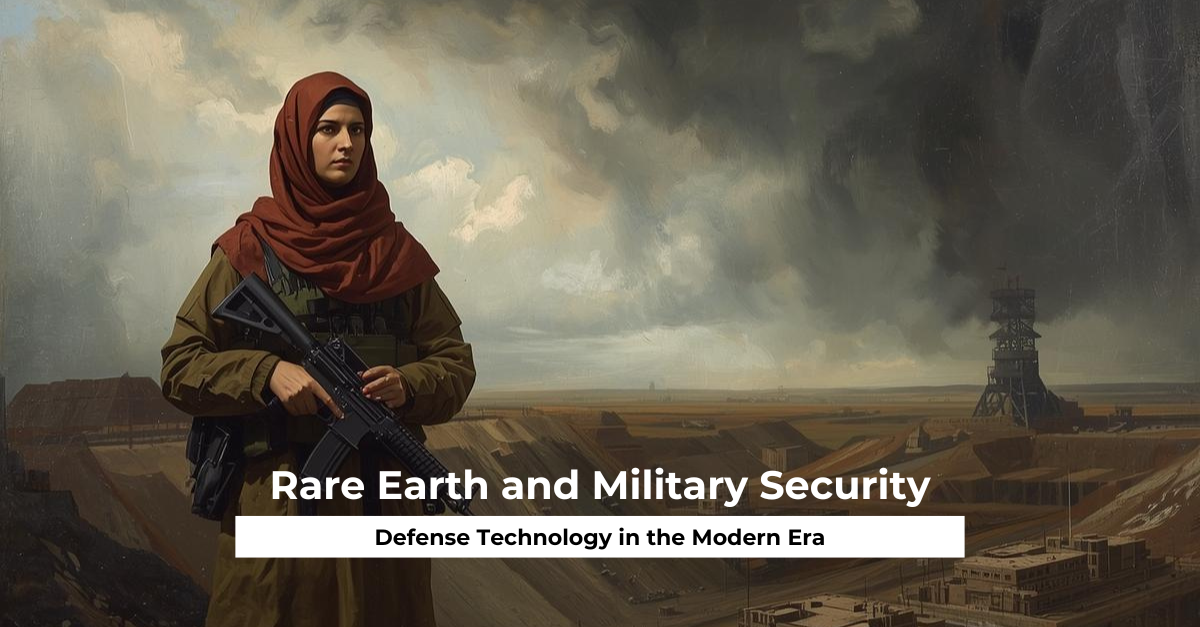
Rare Earth and Military Security Defense Technology in the Modern Era
Lorem ipsum dolor sit amet, consectetur adipiscing elit. Ut elit tellus, luctus nec ullamcorper mattis, pulvinar dapibus leo.Modern military power is no longer defined by sheer numbers.
It is defined by precision, speed, and reliability.
At the center of this shift lies a quiet group of materials: rare earth elements.
They do not explode.
They do not fly.
Yet without them, modern defense systems fall silent.
Rare Earth as the Silent Foundation of Modern Military Power
Small Elements With Strategic Impact
Rare earths are used in tiny quantities.
But their function is critical.
They enable control, guidance, and accuracy.
Think of them as nerves in a body.
Invisible, but essential.
Without them, strength becomes useless.
From Industrial Metals to Defense Assets
Once seen as industrial inputs, rare earths are now strategic assets.
They shape national security planning.
They influence military readiness.
Materials now matter as much as manpower.
Why Modern Warfare Depends on Materials
Modern warfare is technological.
Technology depends on materials.
And materials define capability.
Rare Earth Elements in Defense Technology
Magnets, Sensors, and Precision Systems
High-performance magnets power actuators and motors.
Sensors rely on rare earth optics.
Guidance systems depend on stability.
Failure is not an option.
Rare earths deliver reliability.
Electronics That Cannot Fail
Defense electronics face extreme conditions.
Heat, vibration, radiation.
Rare earth materials endure.
This resilience saves lives.
Reliability as a Military Requirement
Civilian systems tolerate errors.
Military systems cannot.
Rare earths help meet that standard.
Advanced Weapons and Rare Earth Dependency
Missiles and Guidance Systems
Missiles rely on precise navigation.
Rare earth magnets and sensors ensure accuracy.
Small errors change outcomes.
Precision defines modern deterrence.
Radar, Sonar, and Surveillance
Detection systems see farther and clearer.
Rare earth components sharpen signals.
Information arrives faster.
Seeing first often means winning.
Precision as Power
Power today is measured in accuracy.
Rare earths enable that shift.
They turn force into control.
Air Superiority and Rare Earths
Fighter Jets and Lightweight Materials
Modern jets prioritize agility.
Rare earth alloys reduce weight.
Performance improves.
Speed and maneuverability matter.
Stealth Technology and Performance
Stealth coatings and sensors rely on rare materials.
Detection avoidance depends on precision.
Rare earths support that edge.
Speed, Control, and Efficiency
Pilots rely on responsive systems.
Rare earth magnets enable fast control.
Milliseconds matter in combat.
Naval Power and Undersea Technology
Submarines and Silent Propulsion
Quiet movement is critical underwater.
Rare earth motors reduce noise.
Stealth improves.
Silence becomes survival.
Sonar and Detection Systems
Underwater sensing requires sensitivity.
Rare earth elements enhance sonar accuracy.
Threats are detected early.
Dominance Beneath the Surface
Control of oceans begins below them.
Materials shape that control.
Space and Satellite Defense Systems
Communication and Navigation Satellites
Satellites rely on rare earth electronics.
Communication must remain stable.
Navigation must stay precise.
Global military coordination depends on them.
Space-Based Surveillance
Sensors monitor Earth constantly.
Rare earth optics sharpen vision.
Awareness expands.
Rare Earths Beyond Earth
Even space is not free from material dependency.
Defense now extends upward.
Cyber Warfare and Electronic Defense
Data Centers and Secure Infrastructure
Military data centers demand reliability.
Rare earth components stabilize power systems.
Continuity is protected.
Electronic Warfare Systems
Jamming and signal control rely on precision electronics.
Rare earths enhance responsiveness.
Control shifts instantly.
Information as a Battlefield
Modern battlefields are digital.
Materials still matter.
The Global Supply Chain of Military Rare Earths
Mining vs Processing for Defense Use
Mining alone is insufficient.
Processing creates usable materials.
Control lies there.
Supply chains define readiness.
Strategic Vulnerabilities
Concentrated processing creates risk.
Disruptions affect defense.
Planning expands beyond weapons.
Supply Chain as National Security
Materials planning becomes defense planning.
Security starts before production.
China’s Role in Military Rare Earth Supply
Processing Dominance
China controls much of global processing.
This creates strategic leverage.
Defense planners take notice.
Strategic Leverage
Material access influences negotiation power.
Dependence creates vulnerability.
Alternatives become priorities.
Global Defense Concerns
Military readiness now includes material security.
Awareness grows worldwide.
Western Defense Strategies and Rare Earth Security
Stockpiling and Strategic Reserves
United States builds reserves.
Allies coordinate supply.
Preparation replaces assumption.
Diversifying Supply
New sources reduce risk.
Processing capacity expands.
Security improves.
Defense Planning Beyond Weapons
Weapons are systems.
Systems need materials.
Planning adapts.
Rare Earths and Military Alliances
Shared Supply Chains
Allies share resources.
Trust extends to materials.
Collective strength grows.
Resource Cooperation
Joint investments reduce cost.
Shared risk strengthens bonds.
Collective Security
Security becomes collaborative.
Materials unite strategy.
Recycling Rare Earths for Defense Use
Military Equipment Recycling
Old equipment contains valuable materials.
Recycling recovers strategic assets.
Waste becomes reserve.
Reducing Strategic Risk
Local recovery lowers dependence.
Resilience improves.
Circular Defense Economy
Defense systems become loops.
Efficiency increases.
Substitution and Innovation in Defense Materials
Reducing Dependence
Engineers reduce rare earth intensity.
Design evolves.
Risk declines.
Performance Trade-Offs
Substitutes exist.
Performance may change.
Balance matters.
Innovation Under Pressure
Security drives creativity.
Constraints inspire solutions.
Ethical and Environmental Dimensions
Environmental Costs of Defense Materials
Mining damages ecosystems.
Defense has a footprint.
Responsibility follows power.
Moral Responsibility in Security
Protection should not destroy.
Ethics shape long-term security.
The Hidden Price of Protection
True security includes sustainability.
Ignoring costs weakens stability.
The Future of Warfare and Rare Earths
AI, Autonomous Systems, and Sensors
Automation increases material demand.
Sensors multiply.
Rare earth dependence grows.
Rising Demand for Precision
Precision becomes the norm.
Materials support that shift.
Materials as the New Arms Race
Competition moves upstream.
Control begins with resources.
Rethinking National Security in a Resource-Limited World
Security Beyond Firepower
True security includes supply resilience.
Materials define readiness.
Resilience and Sustainability
Sustainable systems endure longer.
Stability strengthens defense.
Preparing for the Long Term
The future favors foresight.
Materials planning becomes strategic vision.
Rare earth elements now sit at the core of military security.
They enable precision, control, and technological superiority.
Without them, modern defense systems cannot function.
As warfare evolves, materials shape outcomes.
Understanding rare earths means understanding security itself.
The battlefield begins long before conflict.
Frequently Asked Questions
1. Why are rare earths critical to modern military technology?
Because they enable precision, reliability, and advanced electronics.
2. Which military systems depend most on rare earths?
Missiles, fighter jets, radar, satellites, and electronic warfare systems.
3. Does rare earth supply affect national security?
Yes, supply disruptions directly impact defense readiness.
4. Can recycling help military rare earth supply?
Yes, it reduces dependency and strengthens resilience.
5. Will rare earths shape future warfare?
Absolutely, especially as technology-driven warfare expands.