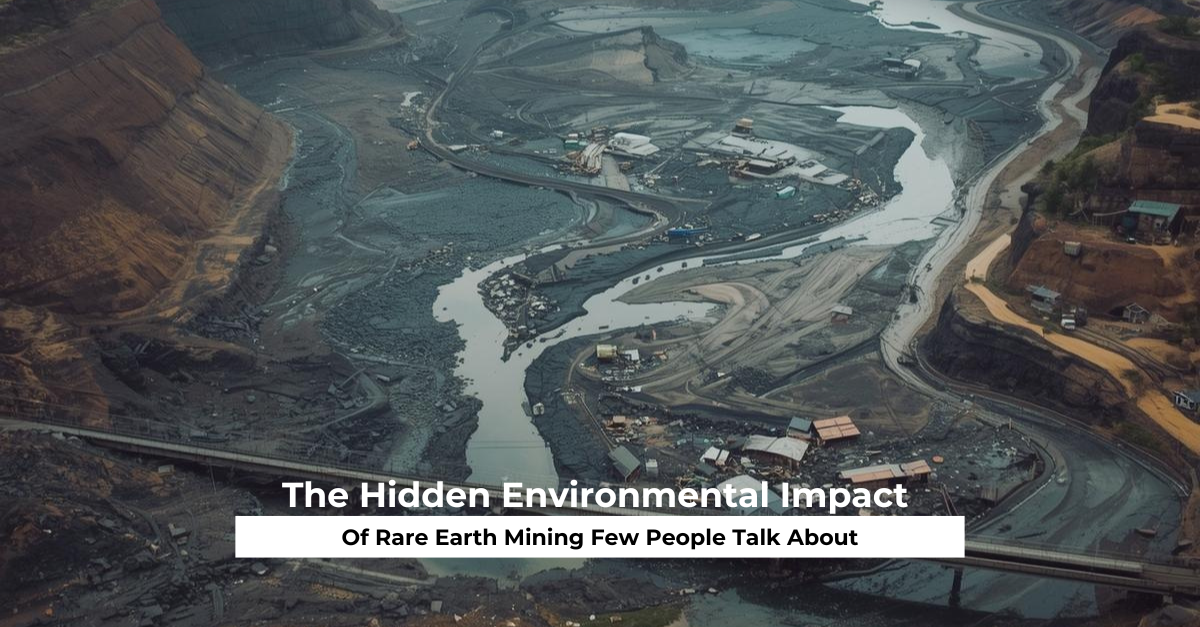
The Hidden Environmental Impact of Rare Earth Mining Few People Talk About
Lorem ipsum dolor sit amet, consectetur adipiscing elit. Ut elit tellus, luctus nec ullamcorper mattis, pulvinar dapibus leo.Rare earth elements sound harmless.
They are tied to clean energy and smart technology.
They promise a greener future.
But beneath that promise lies a quieter story.
One written in polluted rivers and damaged land.
A story few people like to tell.
Rare Earth Mining Beyond the Green Image
Clean Technology With a Dirty Origin
Wind turbines and electric cars feel clean.
They symbolize progress and responsibility.
Yet their raw materials come from the ground.
Rare earth mining is not gentle.
It reshapes landscapes and ecosystems.
The green label often hides this truth.
Why Environmental Costs Are Often Ignored
These impacts happen far from consumers.
Out of sight means out of mind.
Convenience makes silence easy.
The benefits feel immediate.
The damage feels distant.
That imbalance shapes the narrative.
The Gap Between Public Perception and Reality
Rare earths are framed as heroes.
Mining communities experience them as burdens.
Both views exist at the same time.
Understanding both sides matters.
Ignoring one creates fragile solutions.
Land Degradation From Rare Earth Mining
Open-Pit Mining and Landscape Destruction
Rare earth deposits are often shallow.
That leads to open-pit mining.
Huge areas are stripped bare.
Forests disappear.
Topsoil vanishes.
Nature struggles to recover.
Soil Erosion and Loss of Biodiversity
Once vegetation is removed, soil erodes quickly.
Nutrients wash away with rain.
Plants fail to return.
Wildlife loses habitat.
Food chains collapse.
Ecosystems weaken silently.
Long-Term Damage to Local Ecosystems
Rehabilitation is slow and expensive.
Some land never fully recovers.
Scars remain for generations.
Mining ends.
Damage stays.
Toxic Waste and Tailings
Chemical Byproducts From Rare Earth Processing
Extracting rare earths requires chemicals.
Acids dissolve the ore.
Waste is left behind.
That waste contains heavy metals.
Sometimes radioactive materials.
Managing it is a constant risk.
Tailings Ponds and Leakage Risks
Tailings ponds store toxic slurry.
They look calm on the surface.
But leaks happen.
Small cracks create big problems.
Pollution spreads quietly.
Cleanup becomes nearly impossible.
Why Cleanup Is So Difficult
Toxic waste mixes with soil and water.
Separating it is complex.
Costs skyrocket.
Many sites are abandoned.
Communities are left to adapt.
Water Pollution That Travels Far
Acid Leaching and Heavy Metals
Acid leaching releases rare earths.
It also releases contaminants.
Water carries them downstream.
Rivers do not respect borders.
Pollution spreads far beyond mines.
Impact on Rivers and Groundwater
Groundwater becomes unsafe.
Rivers lose life.
Fishing collapses.
Communities feel the impact daily.
Water becomes something to fear.
Effects on Agriculture and Drinking Water
Crops absorb heavy metals.
Food safety declines.
Health risks increase.
What starts in a mine
ends on a dinner table.
Air Pollution and Radioactive Dust
Fine Particles in Mining Areas
Dust fills the air near mines.
Tiny particles enter lungs.
Breathing becomes a hazard.
Workers face constant exposure.
So do nearby residents.
Naturally Occurring Radioactive Materials
Some rare earth ores contain thorium.
It is weakly radioactive.
Still dangerous over time.
Dust carries it everywhere.
The risk is invisible.
Invisible Threats to Human Health
Cancer risks rise slowly.
Symptoms appear years later.
Connections are hard to prove.
Silence protects no one.
Human Health Impacts Often Overlooked
Respiratory and Skin Diseases
Communities report higher illness rates.
Skin conditions increase.
Breathing problems become common.
Medical support is often limited.
Diagnosis comes late.
Long-Term Community Health Risks
Children are especially vulnerable.
Exposure shapes development.
Effects last a lifetime.
Health becomes the hidden cost of technology.
Generational Effects
Damage does not end with one generation.
Pollution lingers.
So do consequences.
Rare Earth Mining and Climate Change
Energy-Intensive Extraction Processes
Mining uses massive energy.
Processing even more.
Emissions add up quickly.
Green technology begins with carbon.
That contradiction matters.
Carbon Footprint of Processing and Transport
Rare earths travel long distances.
Mining, refining, shipping.
Each step emits carbon.
Efficiency improves slowly.
Demand grows faster.
The Climate Paradox of Green Technology
Clean energy depends on dirty inputs.
This paradox must be acknowledged.
Ignoring it delays real solutions.
The Case of China’s Rare Earth Regions
Environmental Sacrifice Zones
China dominates rare earth production.
Certain regions paid the price.
Land and water suffered.
These areas became sacrifice zones.
Economic growth came first.
Lessons From Decades of Extraction
Regulation improved later.
Damage had already occurred.
Recovery remains incomplete.
Experience offers lessons.
If others are willing to learn.
What the World Can Learn
Early regulation matters.
Transparency matters.
Ignoring impacts only multiplies them.
Why Regulation Often Falls Short
Weak Environmental Enforcement
Rules exist on paper.
Enforcement is inconsistent.
Economic pressure wins.
Mining brings jobs.
Governments hesitate to interfere.
Economic Pressure vs Environmental Protection
Short-term gains feel urgent.
Long-term damage feels abstract.
Policy reflects that imbalance.
Regulatory Gaps
Global demand moves fast.
Regulation moves slowly.
The gap widens.
Rare Earth Recycling and Its Environmental Promise
Reducing Mining Pressure
Recycling recovers valuable materials.
It reduces new mining.
Environmental pressure eases.
But progress is slow.
Environmental Benefits and Limits
Recycling is cleaner.
Not clean.
Energy and chemicals are still needed.
It helps.
It does not solve everything.
Recycling Is Not a Silver Bullet
Demand still grows.
Mining continues.
Recycling buys time.
Cleaner Mining Technologies
New Extraction Methods
Scientists explore bio-leaching.
Less acid.
Lower toxicity.
Innovation moves forward.
Cautiously.
Reducing Chemical Use
Closed-loop systems reduce waste.
Costs remain high.
Adoption is limited.
Slow but Necessary Progress
Cleaner mining is possible.
But it requires investment.
And patience.
The Role of Consumers
Demand Drives Environmental Cost
Every device has a footprint.
Demand fuels extraction.
Awareness matters.
Consumption shapes supply.
Conscious Consumption
Longer device lifespans help.
Repair matters.
Recycling matters.
Small choices add up.
Awareness as Power
Understanding creates pressure.
Pressure creates change.
Silence maintains harm.
Rare earth mining carries environmental costs rarely discussed.
Behind clean technology lies complex damage.
Ignoring it weakens sustainability.
A truly green future requires honesty.
About materials, impacts, and limits.
Only then does progress become real.
Frequently Asked Questions
1. Why is rare earth mining so harmful to the environment?
Because it uses toxic chemicals and creates hazardous waste.
2. Are rare earths radioactive?
Some ores contain radioactive byproducts like thorium.
3. Can recycling eliminate environmental damage?
No, but it significantly reduces new mining needs.
4. Which environmental impact is the most serious?
Water pollution is often the most widespread and long-lasting.
5. Can rare earth mining become truly sustainable?
It can improve, but zero impact remains unlikely.